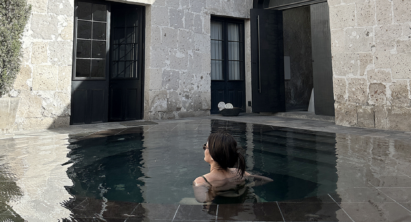
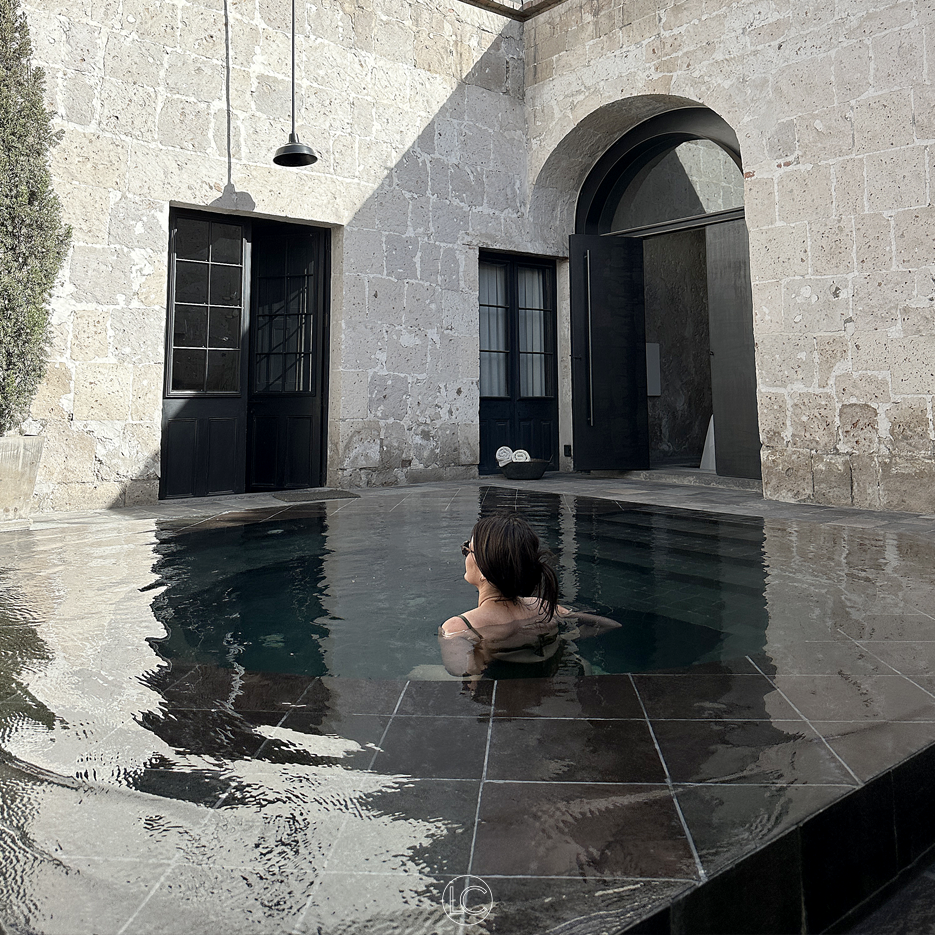
The water comes up to my neck. It’s so warm it feels almost womb-like. Ripples form as a couple of doves swoop down to skim the puddles next to the soaking pool. I float, exhausted from nearly ten hours of transit including a pre-dawn flight from Santiago to Lima, and then another hour-long flight to Arequipa in the south of Peru.
The sun casts a ray onto the facade of our room. The entire building is made from white volcanic stone bricks called sillar, the building material for all of Arequipa, known as the White City. The stone catches and holds the light differently depending on the hour, and even from the pool I can see how the shadows shift across the courtyard walls as the afternoon moves.
After soaking for a while, my husband sleepily emerges and eases into the pool. The tiredness is finally loosening its grip and I am starting to feel the itch to head out to explore.
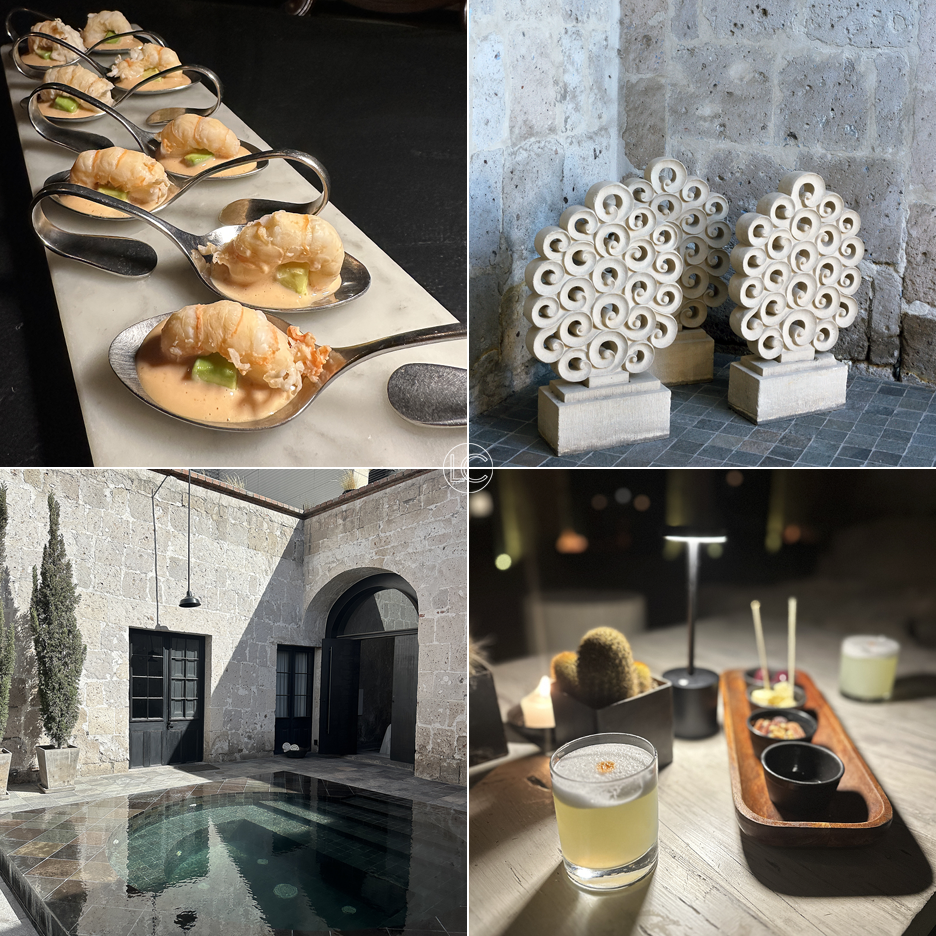
A few hours earlier, we’d landed in Arequipa on Thanksgiving Day. With high crosswinds and a bumpy approach between three towering volcanoes, I was grateful to be safely on the ground. The road to town wound down and around the outer sprawl before eventually opening into the historic center where we arrived at our beautiful hotel, Cirqa.
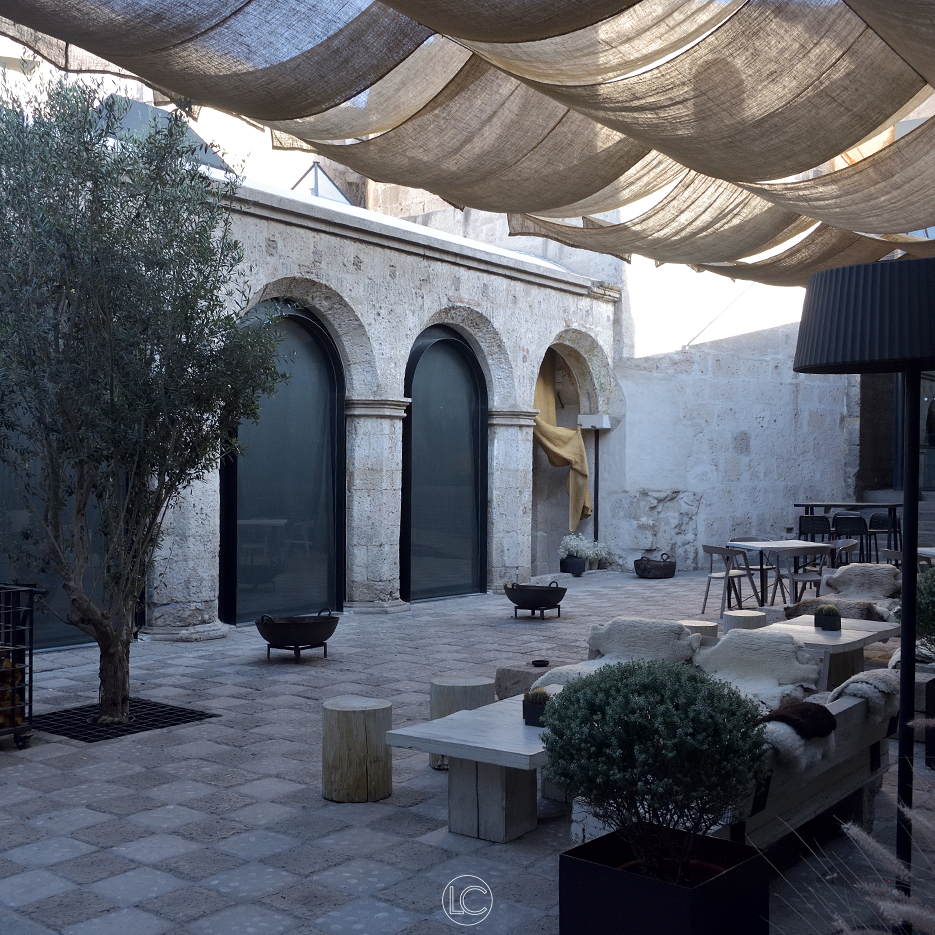
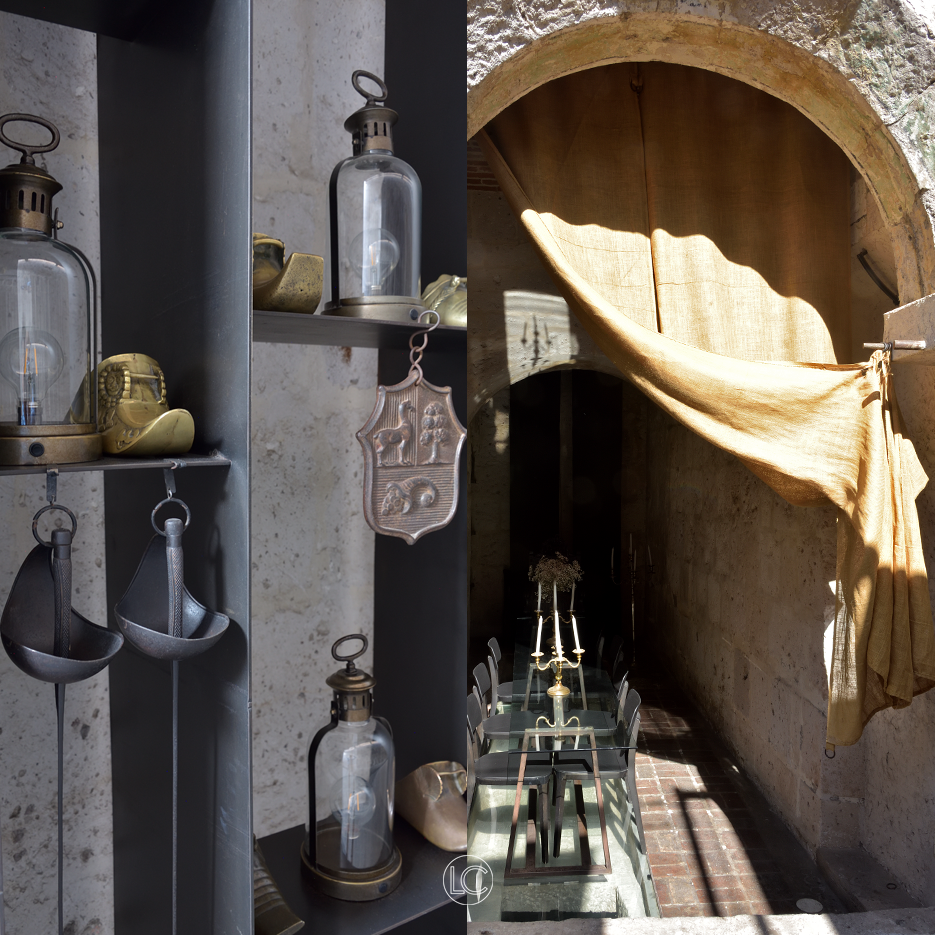
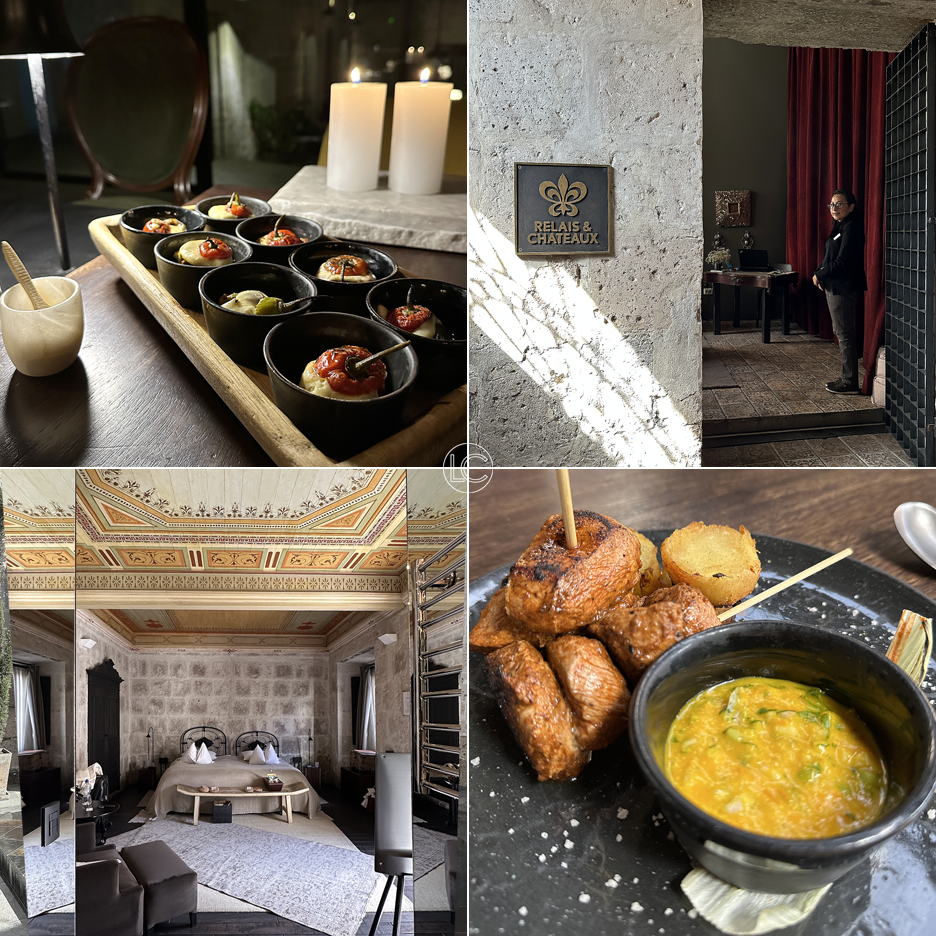
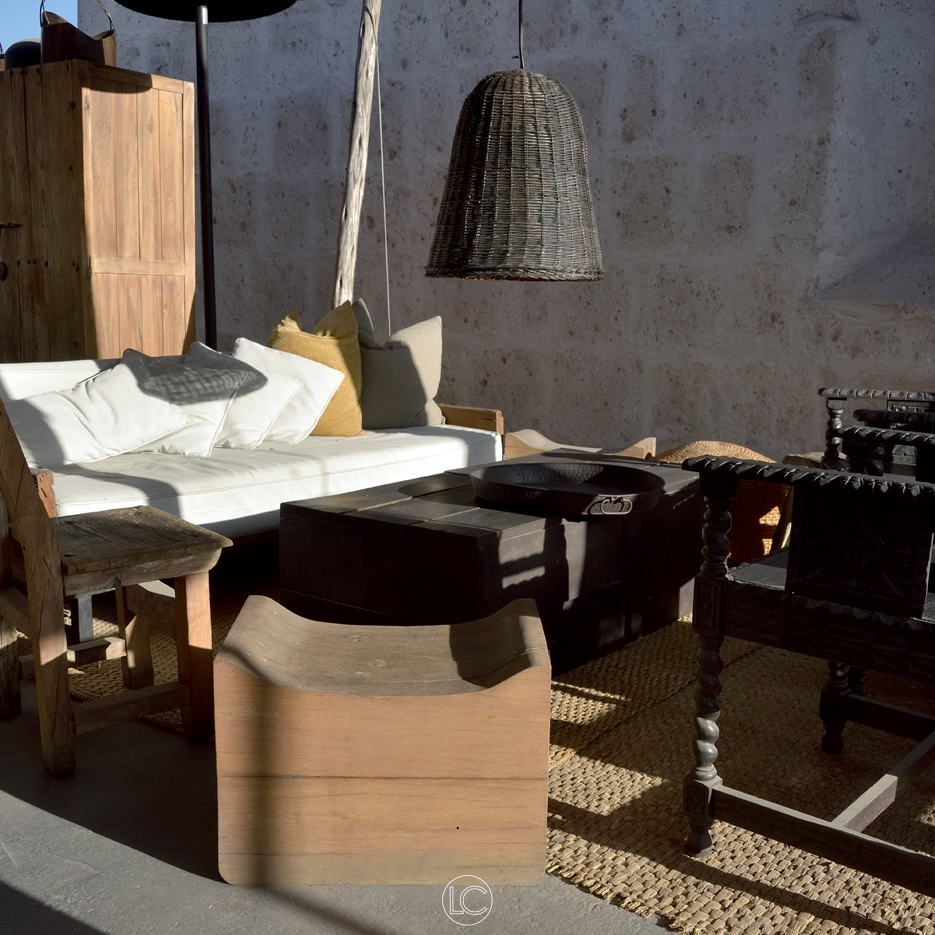
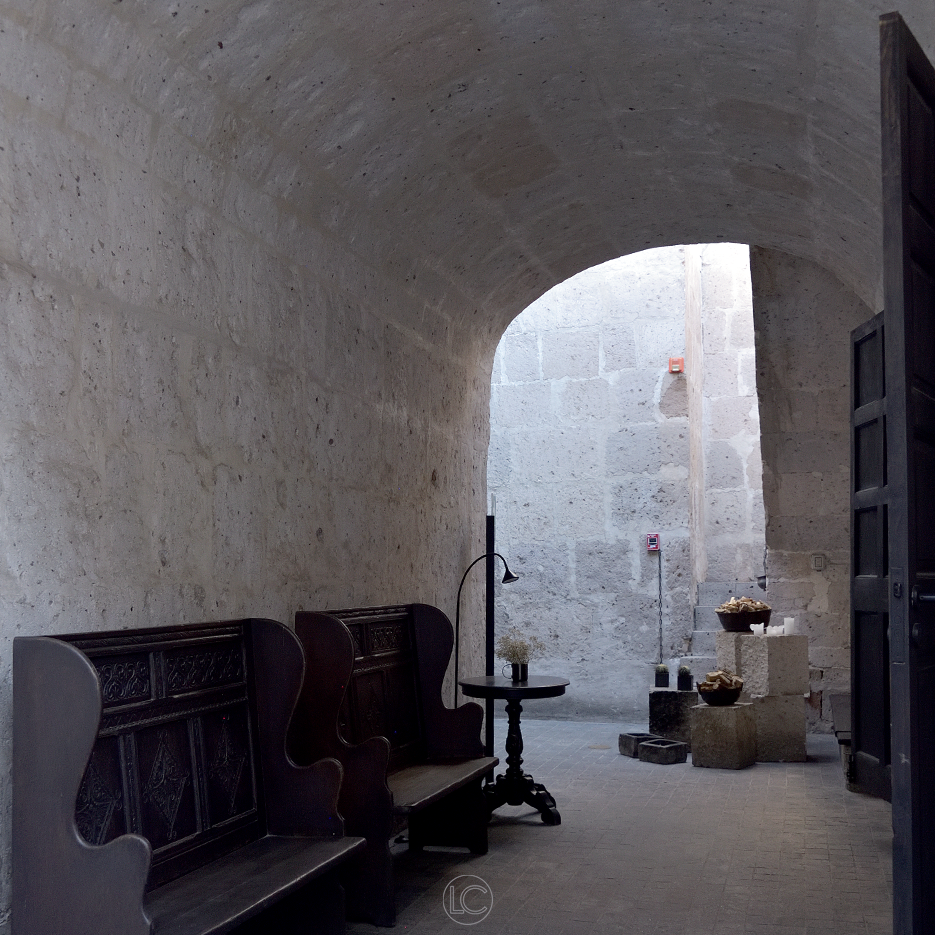
Stepping through a single wooden door, the street disappeared behind me. Inside, the building, dating back to 1540, the narrow entrance opened into a series of courtyards connected through arched colonnades, with olive trees and linen canopies filtering the intense light overhead. With only eleven rooms, each room maintained the original vaulted ceiling — frescoed brick, nearly five centuries old — while everything else had been stripped to a spare, modern decor.
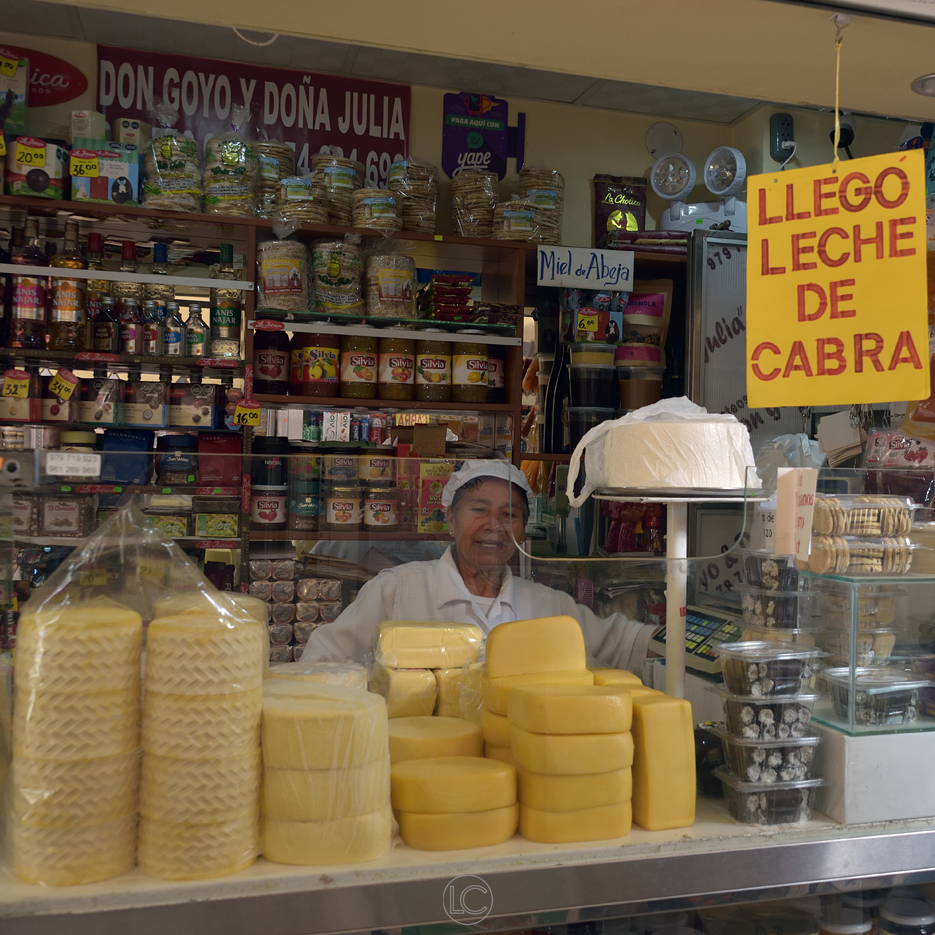
Feeling ravenous, and very thirsty, we sat down to order celebratory pisco sours to toast being back in Peru and experiencing the joy of Thanksgiving abroad (no cooking required). Two perfectly frothy cocktails arrived soon after, their bright, limey tang going down dangerously easily. We ordered grilled alpaca skewers with ají amarillo (yellow chili) sauce and solterita arequipeña, the most delectable salad of fresh fava beans, corn, tomatoes, olives, and queso caparella, the intensely salty cheese from the region. By the time the food arrived, I already wanted a second pisco sour.
“Tread lightly and hydrate,” I thought to myself. At 2,300 meters above sea level, Arequipa’s high, dry climate can sneak up on you, along with the pisco.
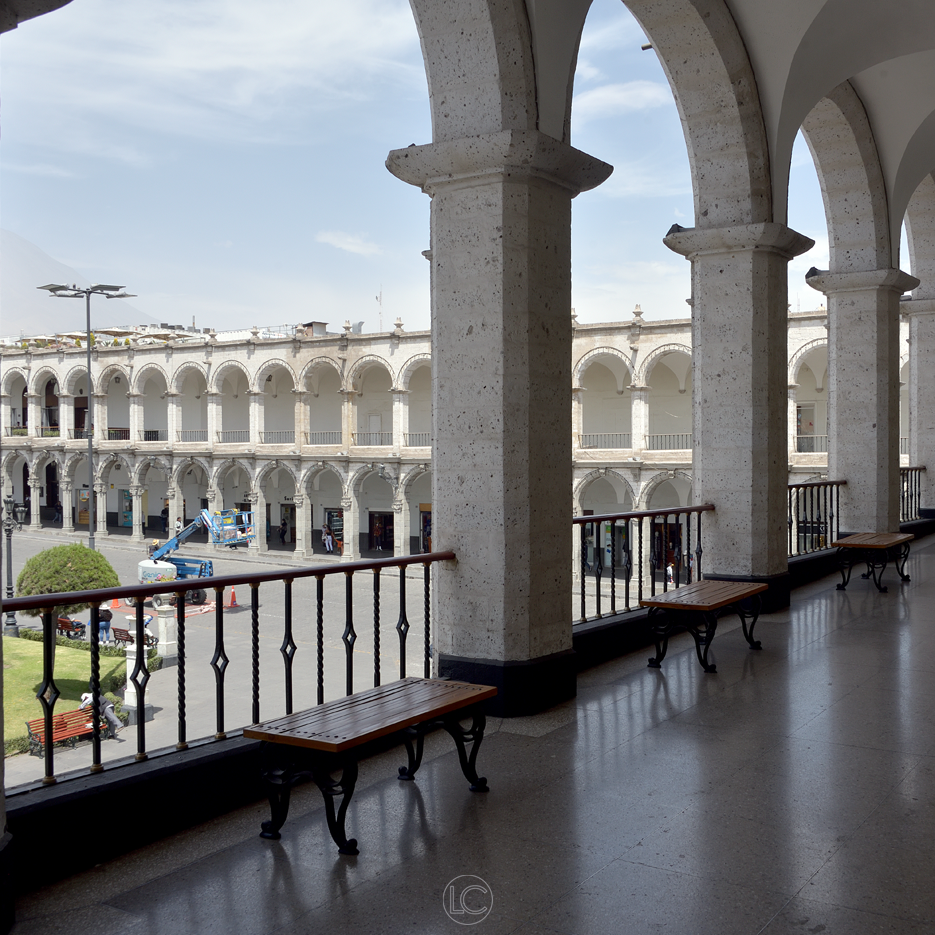
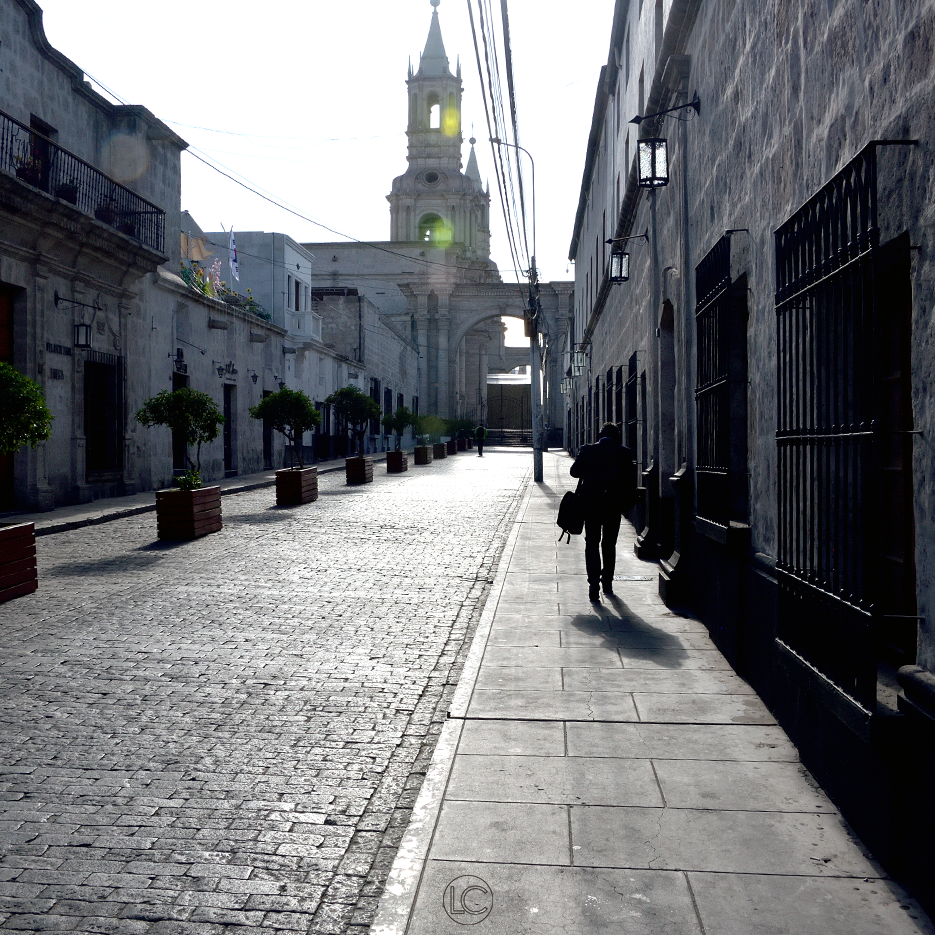
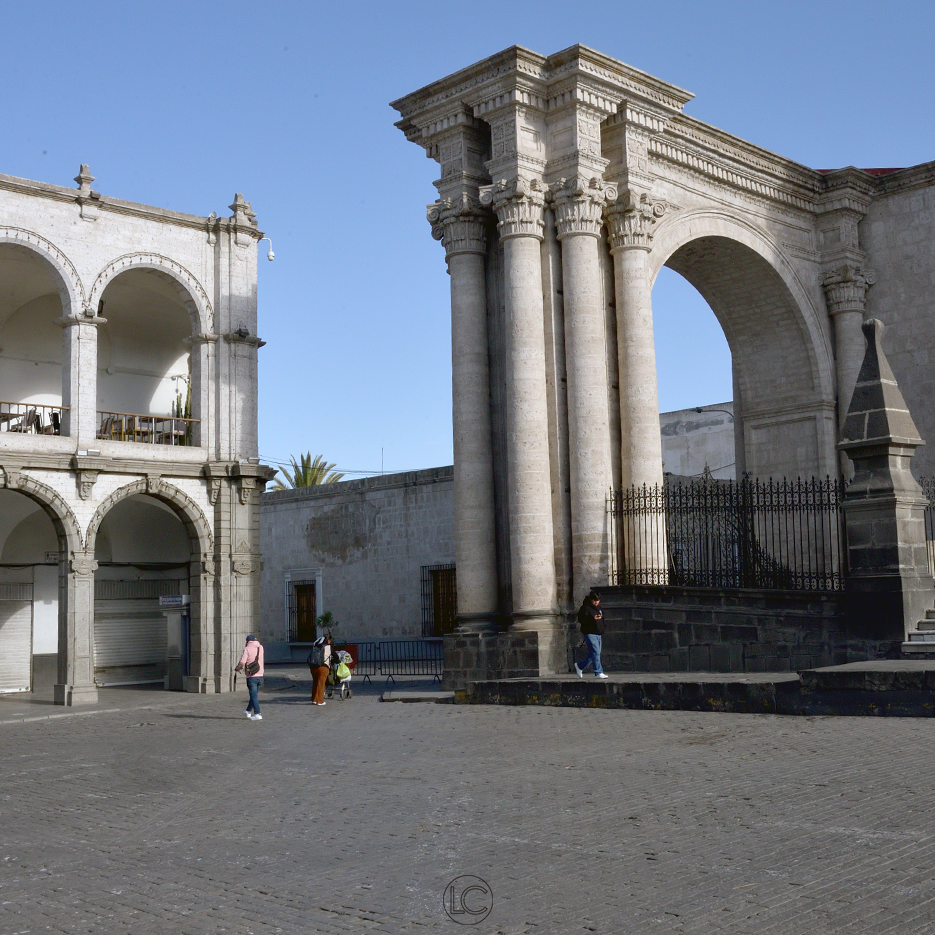
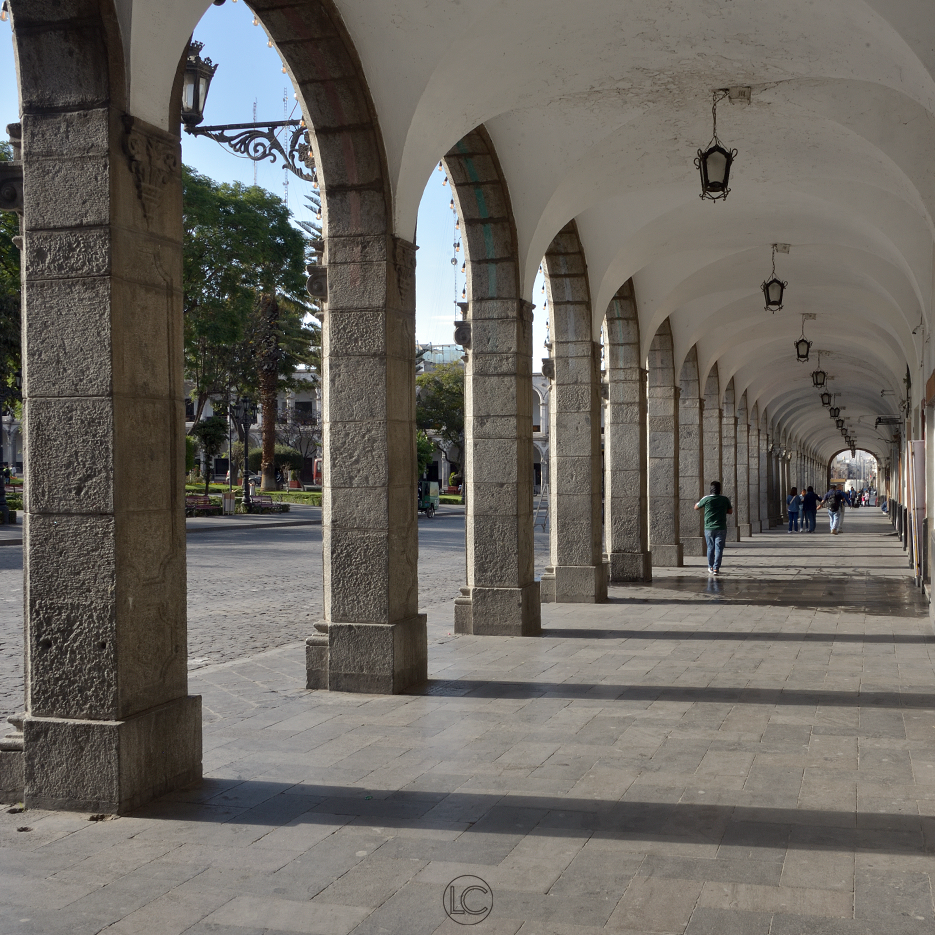
At golden hour, we set out for the Plaza de Armas, just two blocks from the hotel. As we approached, the narrow colonial streets gave way to an enormous square with the cathedral to the north, the arcades framing the sides, and the silhouette of Misti volcano rising just beyond the bell tower.
The entire colonial center is built from sillar, and at this hour it caught the last sunlight and bathed everything in an amber glow. Wreaths had already been placed on the cathedral doors and lights were being strung along the arcades. Workers were assembling a nativity scene in front of the church while locals were out paseando, strolling, and teenagers clustered on benches the way teenagers do everywhere.
There were not many tourists — the vibe was decidedly local. The first time I went to Peru in 2003, Cusco had this same undiscovered feel, and over the years we’ve watched it tip into crowd mitigation. Arequipa still felt like Peru before all of that.
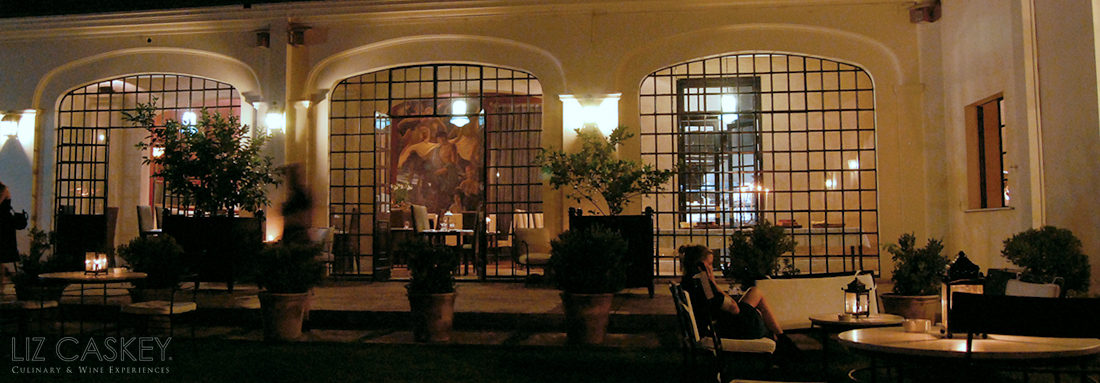
We wandered until twilight then came back to the hotel where they had lit fogatas — bonfires — on the terrace. We sat outside with drinks and snacks, not particularly hungry after our late lunch. The atmosphere at Cirqa after dark, with the firelight dancing, was one of those evenings where you don’t need anything else. The city was already working its magic on us.
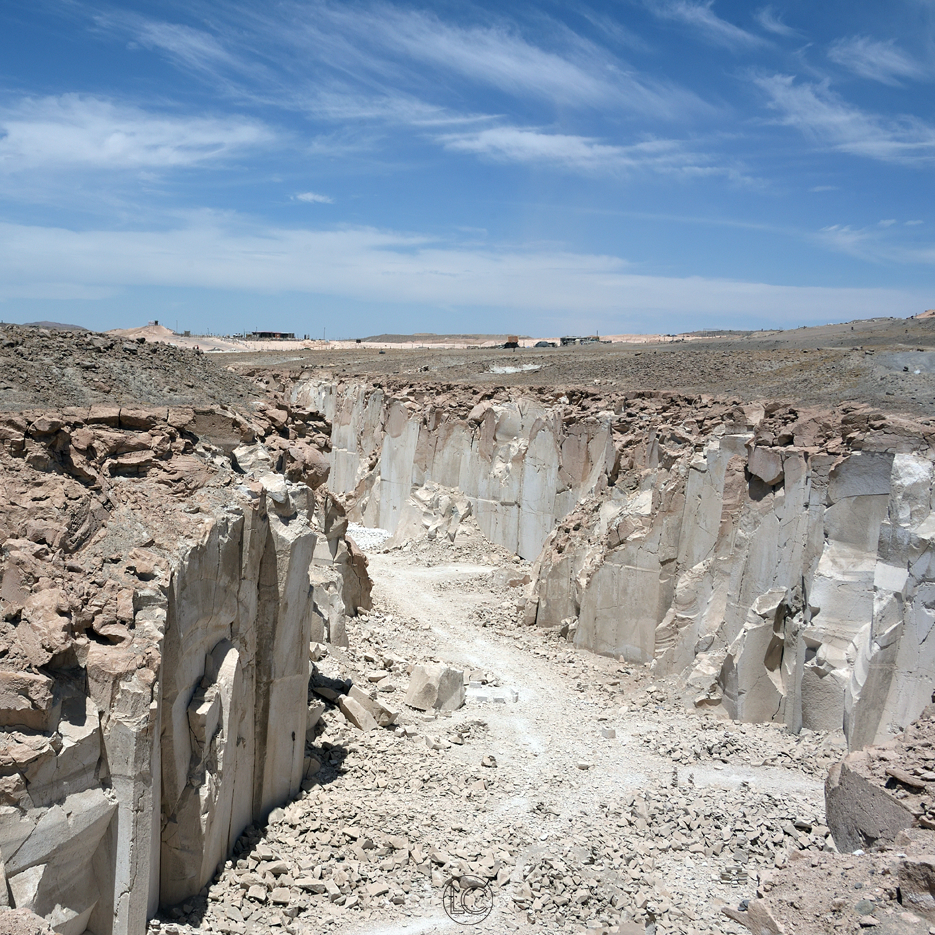
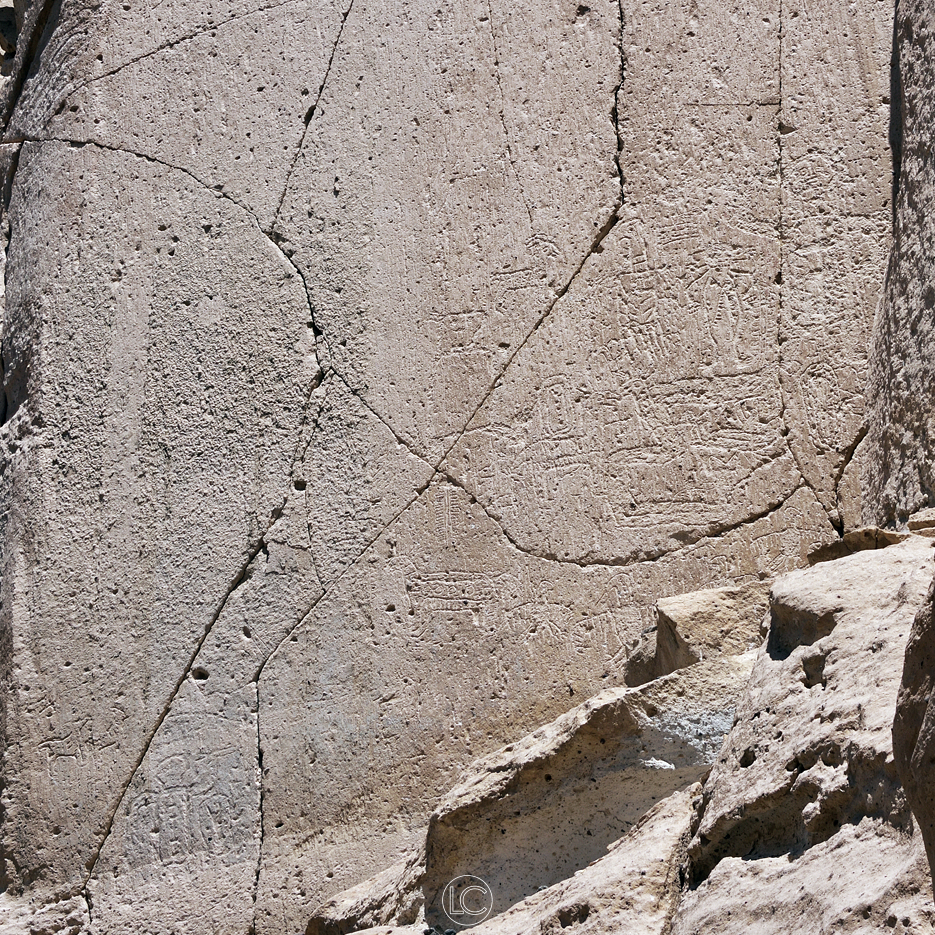
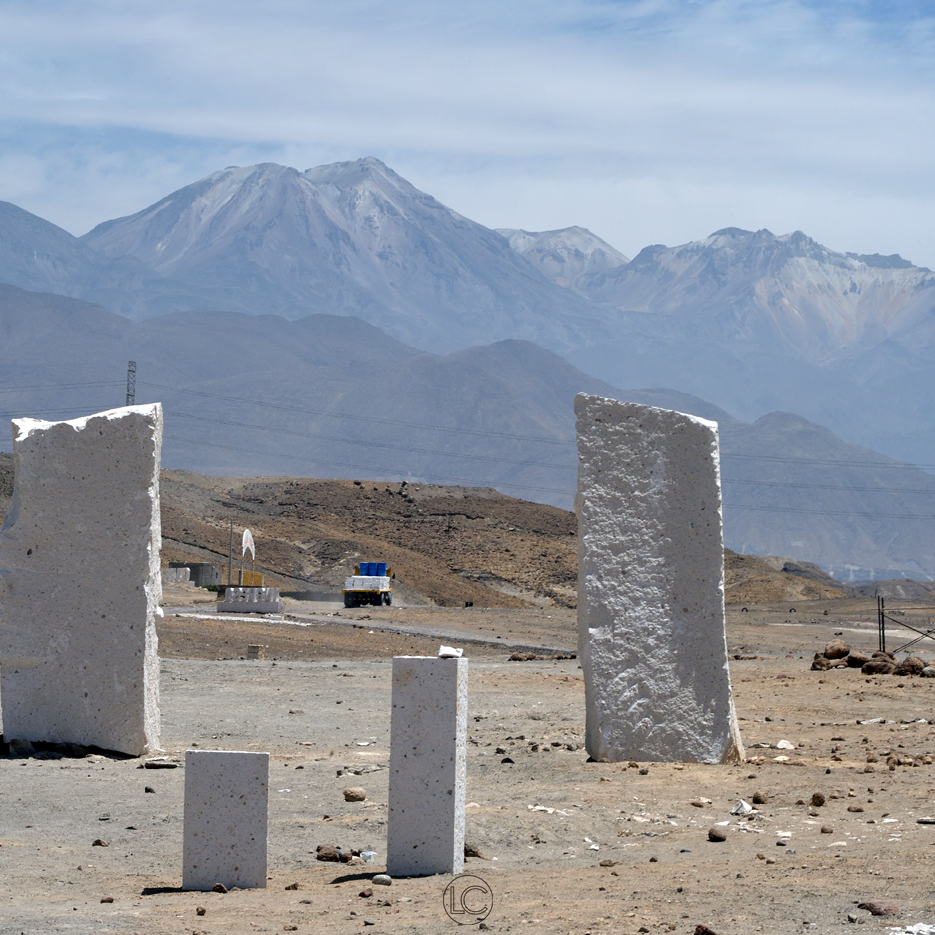
The next morning, bright and early, we rendezvoused with our guide, Leo, who was a born and raised arequipeño. We drove to the outskirts of the city to the quarry where all the sillar — ignimbrite, compressed ash and pumice — is extracted. What should have been a short drive stretched out with traffic and proved to be an unhinged obstacle course full of stray dogs and stoplights as suggestions — I was grateful to not be behind the wheel.
Leo explained that Arequipa sits in a protected zone and river valley that produces much of Peru’s exported fresh produce. Irrigation turns what would otherwise be high desert into an oasis. Ringed by three volcanoes — Misti, Chachani, and Pichu Pichu — Misti sits directly overhead at nearly 5,800 meters high. Being active, and close enough to the city center, an eruption scenario would produce a “Peruvian Pompeii” in about 17 minutes.
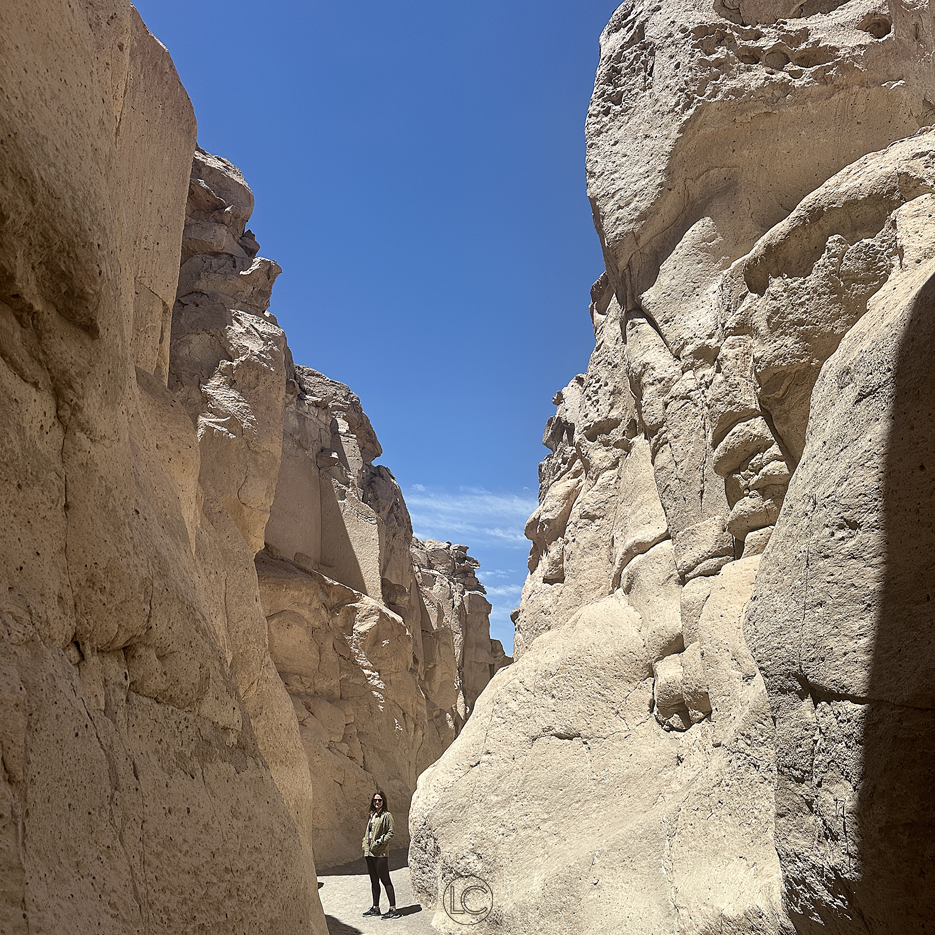
Nearing the quarry, the land turned blindingly white with huge cuts out of exposed earth. We passed the first section which felt like a theme park complete with a replica of Petra carved from the stone. We stopped to hike the Quebrada de Culebrillas, a mini-canyon surrounded by tall winding walls. As we scrambled over some of the rocks, Leo, with his wide-brimmed hat, reminded me of a Peruvian Indiana Jones.
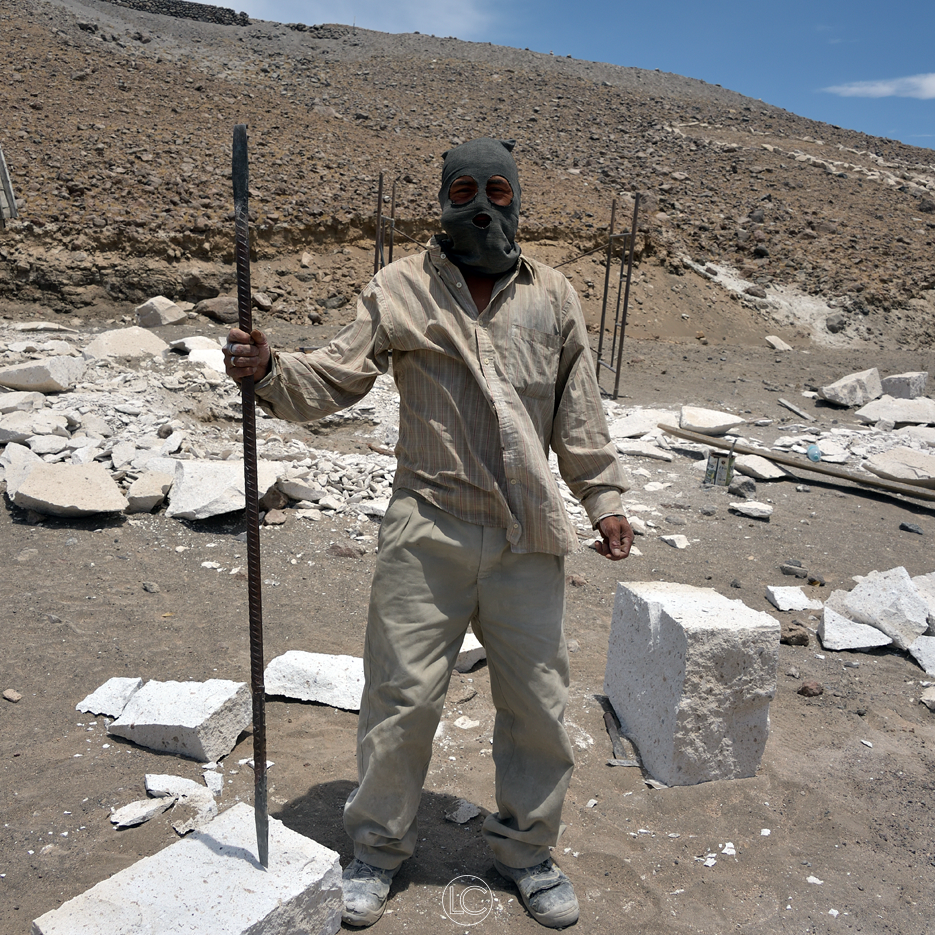
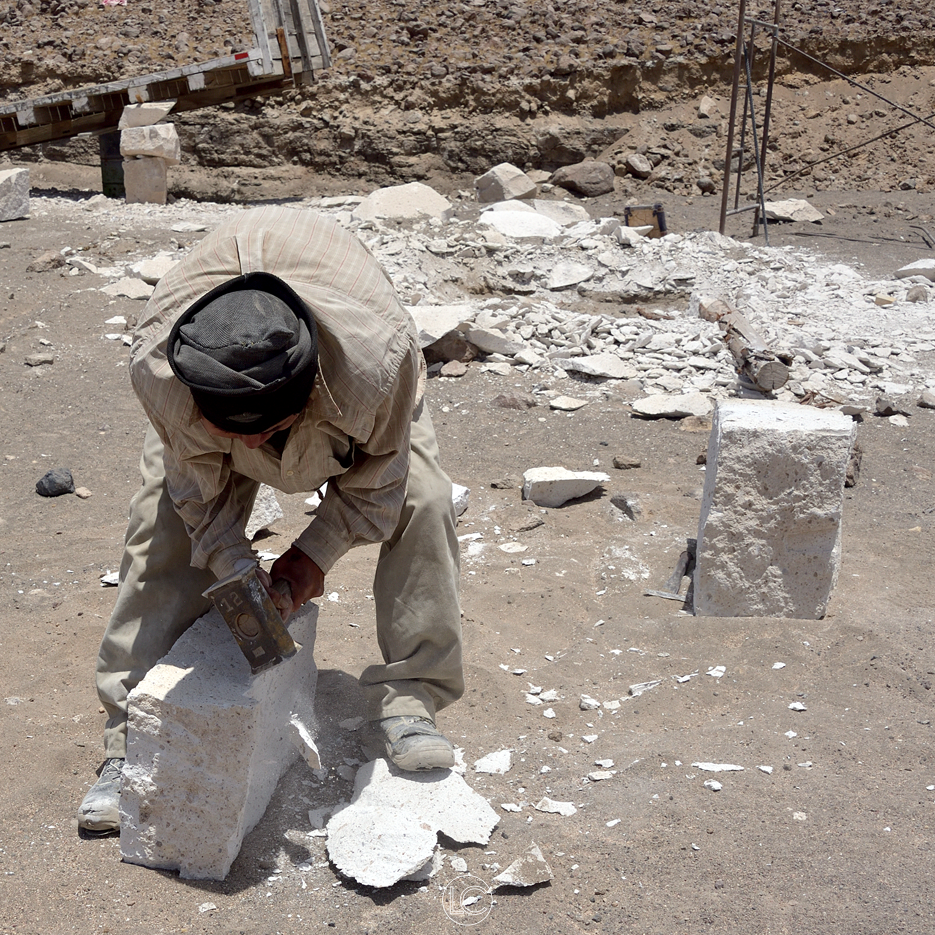
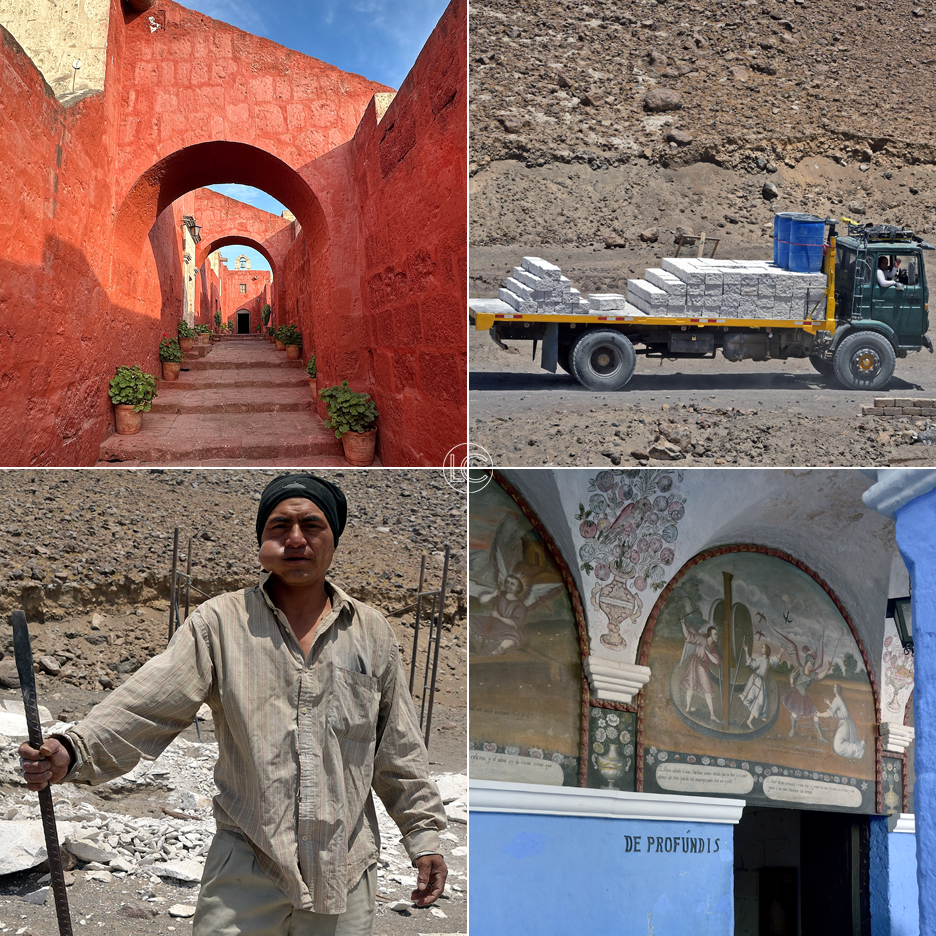
We continued down the road with mountains of raw sillar boulders on either side. Leo had arranged for us to meet an artisan who still cuts sillar bricks by hand, a craft that has built the city for five hundred years. A man covered from head to toe including a face mask approached with an enormous ball in one cheek, looking like a chipmunk. He was chewing a wad of coca leaves, which is common among Andean workers in the altiplano. Coca leaves are energetic, suppress appetite, and make heavy manual labor at altitude considerably easier.
The artisan took a large block of sillar and explained how to split the stone. Placing the wedge into the grain in the center of the stone, with one precise whack, he cleaved the block in two. Being so lightweight and porous, and with the force applied correctly, the block separated almost willingly. He evened the edges, shaping it into a brick identical to the ones that make up every colonial building in the city. This is how literally every structure in Arequipa’s historic center has been built since the sixteenth century. These artisans are becoming scarce though — fewer people want this kind of labor, and the craft is slowly disappearing.
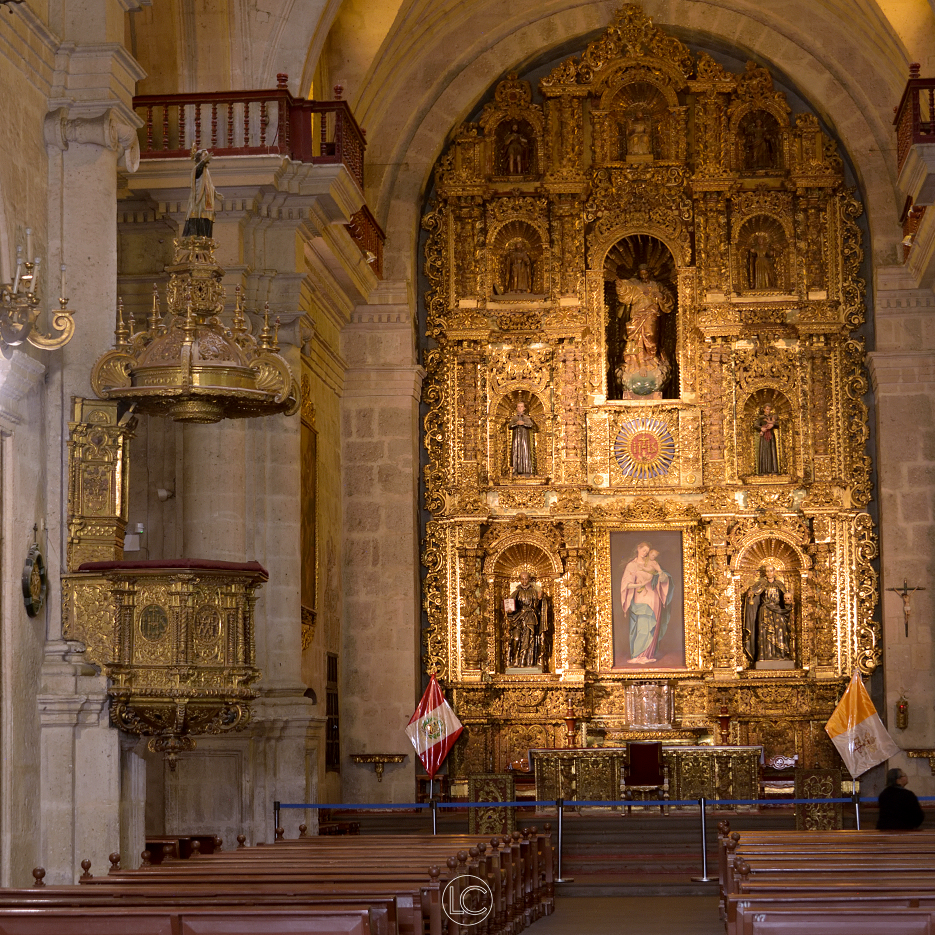
Back in the city, we spent the afternoon on foot. Walking through Arequipa, you start to feel how important this city once was with the grandeur of the churches and buildings. Positioned between Lima, the mining wealth of Potosí (Bolivia), and the ports of the Pacific, it became one of the great colonial strongholds of southern Peru — politically influential, deeply Catholic, and wealthy from trade and agriculture. Leo walked us through the historic center — church after church with Baroque gold interiors, the heavy ornamentation that the Spanish crown used as much for conversion as for worship.
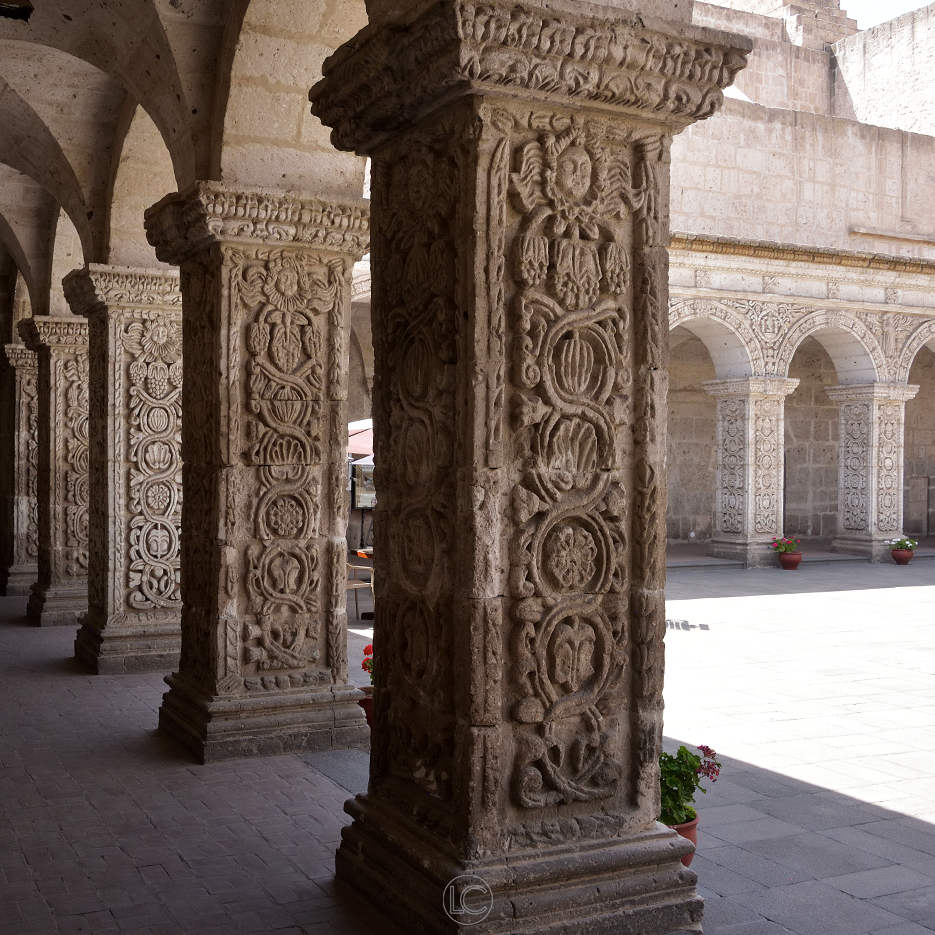
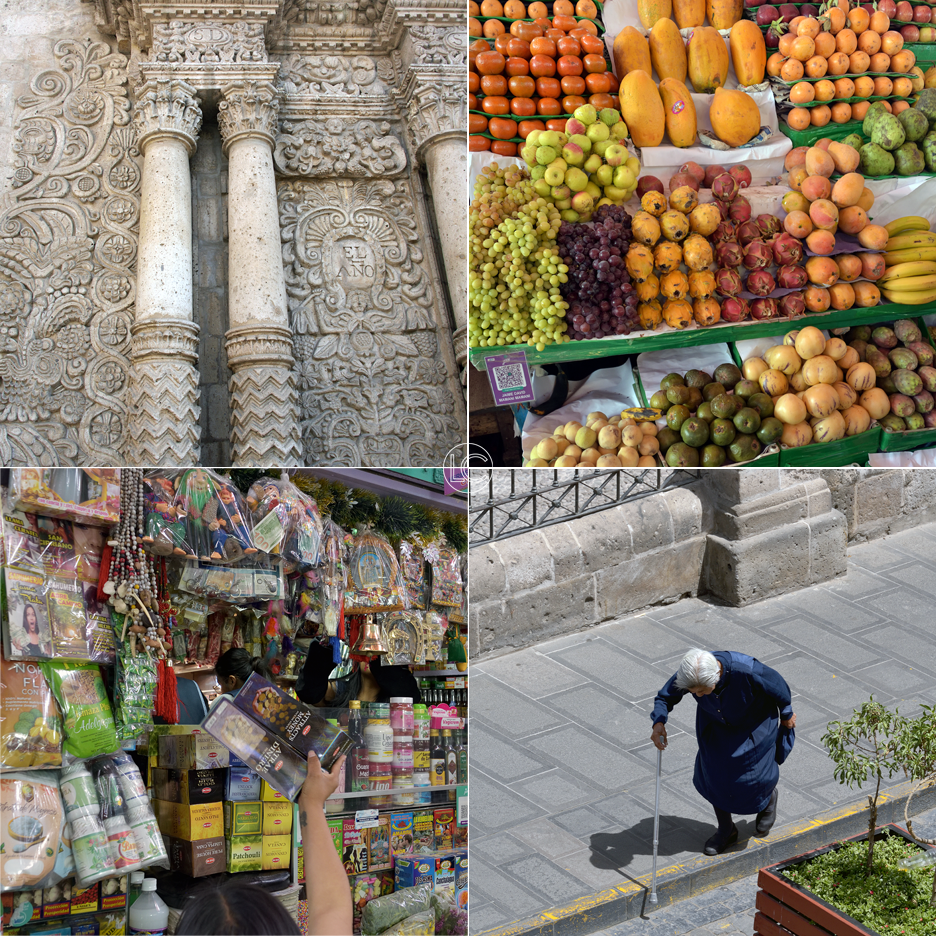
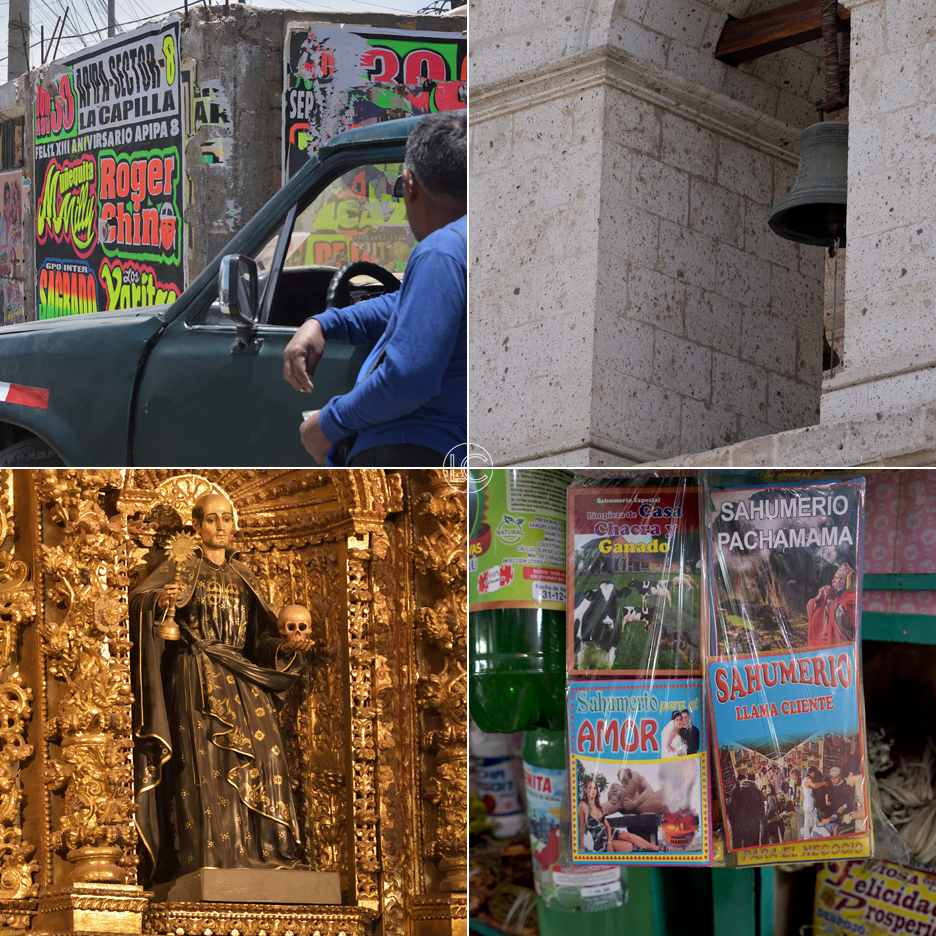
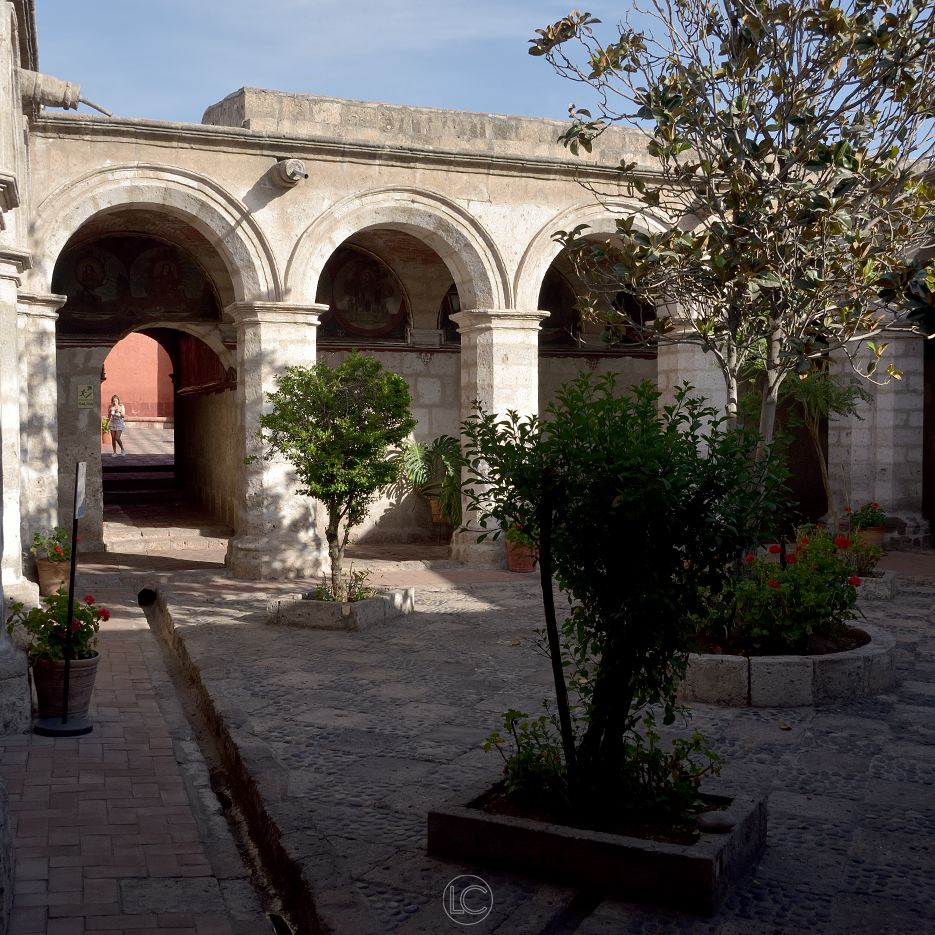
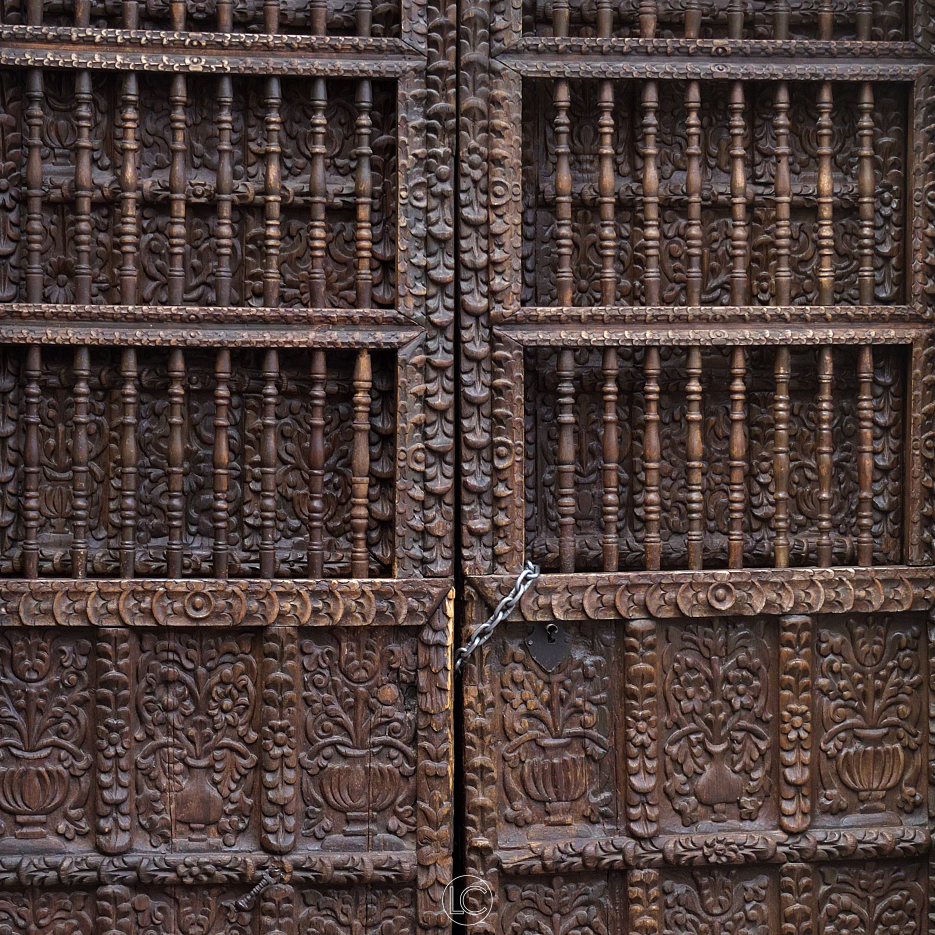
While I was not up for visiting every single church in Arequipa, Leo insisted on showing us Iglesia de la Compañía with its intricate facade full of tropical birds, vines, flowers, masks, saints, and symbols and lavish gold interior. Built by the Jesuits during the height of Spanish colonial power, the church is one of the finest examples of Mestizo Baroque in Peru — European religious ornamentation fused with Indigenous craftsmanship, carved entirely from sillar. Wandering through the cloisters adjacent to the church, the arcaded courtyards felt almost Andalusian.
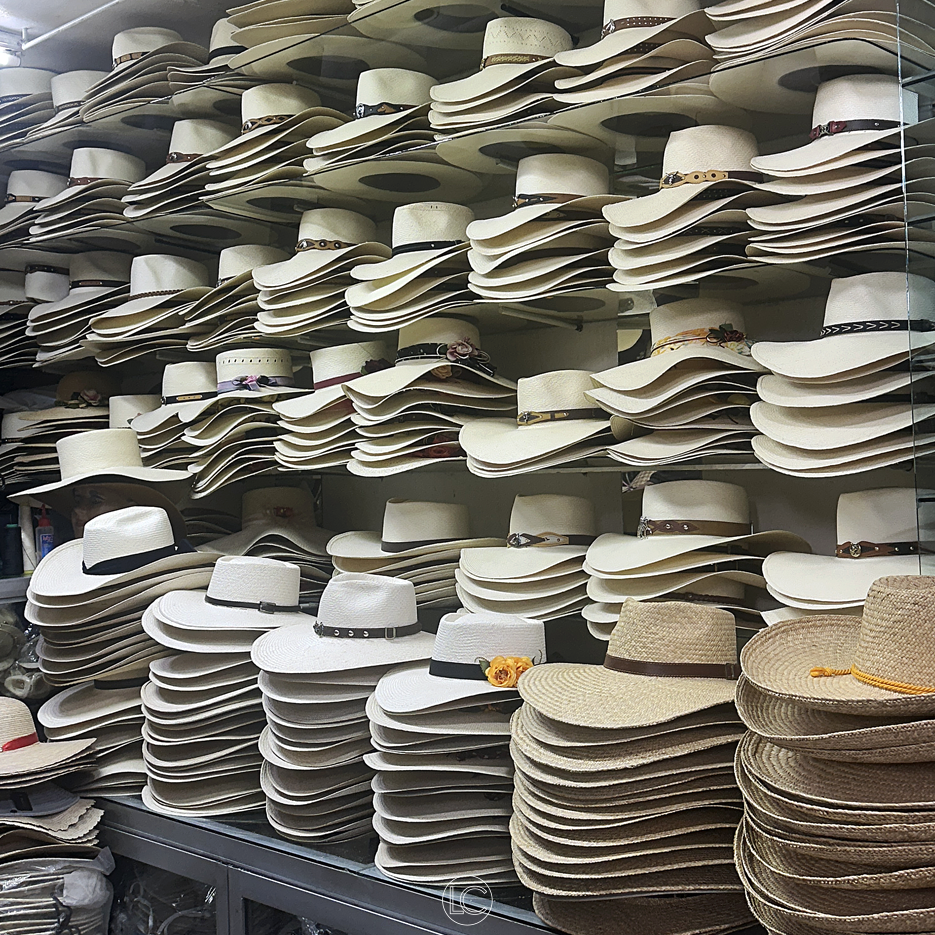
We zigzagged down busy commercial streets toward the San Camilo market for a glimpse into truly local culture, both food and people. Walking into the market, it was like stepping into the circulatory system of Arequipa. It was a pulsating maze. Leo motioned to follow him down an aisle stacked floor-to-ceiling with the wide-brimmed straw hats so iconic to Arequipa, that provide protection against the relentless sun.
We continued past stalls selling herbal remedies, lucky charms, bottles of floral water for protection against mal de ojo, offerings to the Pachamama, dried llama fetuses for ceremonial burial blessings, candles, saints, rosaries, and incense. Leo stopped to buy us charm bracelets made from Amazonian seeds for good luck. While standing there, I noticed the Virgin Mary nestled in coca leaves next to natural aphrodisiac pills called rompe calzones. Catholicism, Andean cosmology, and everyday superstition playing out in a uniquely Peruvian way.
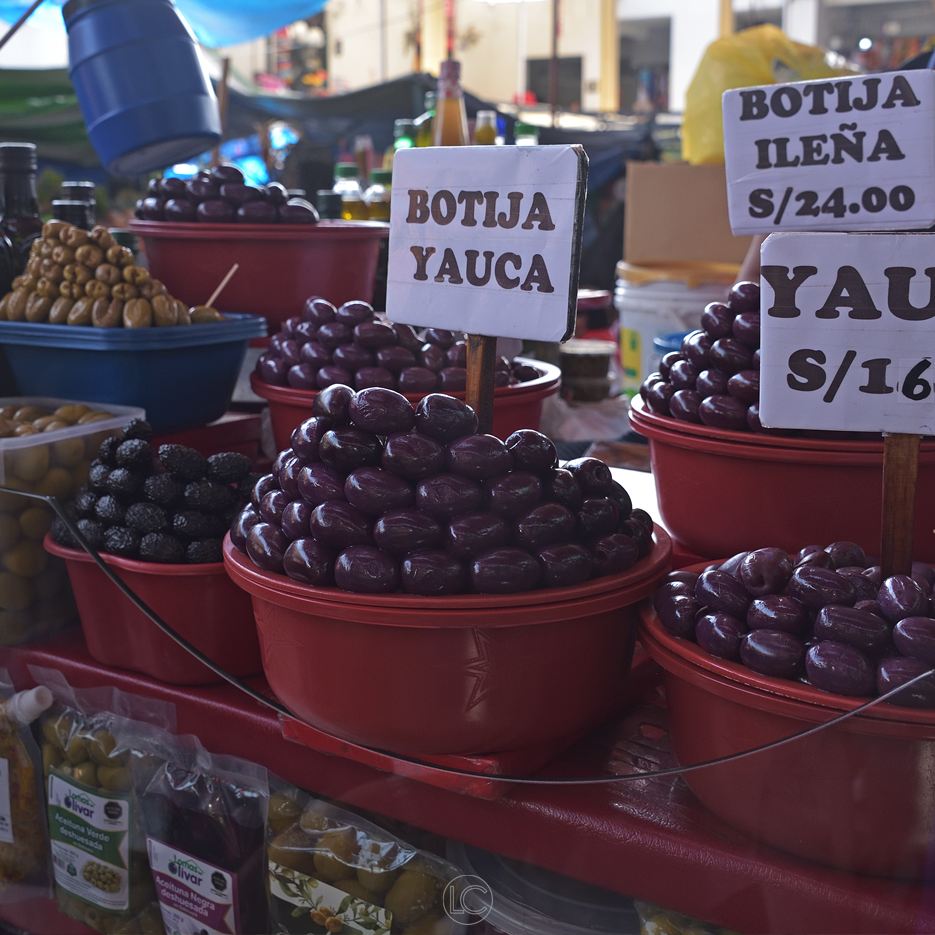
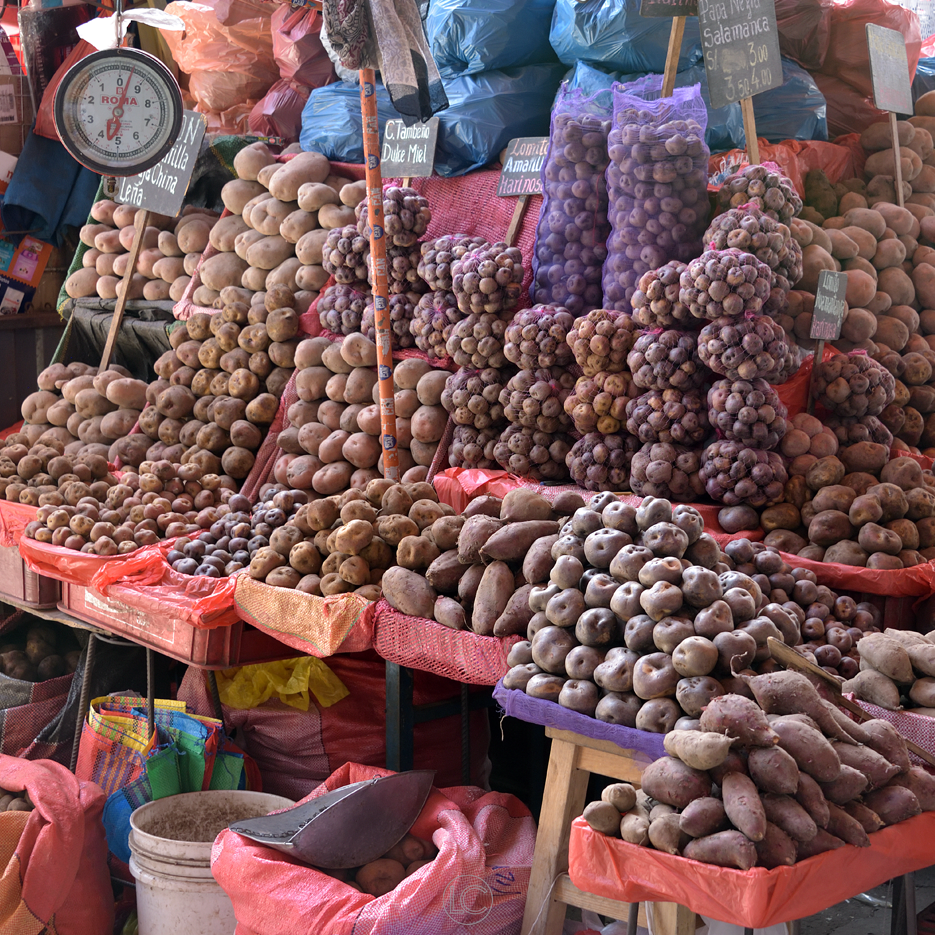
I smelled the sweetness of the most aromatic pineapple, probably from the selva (jungle) and sure enough, the next corridor was full of fresh fruit and juices. Rows of women in aprons fed papaya, chirimoya, strawberries, bananas, and lúcuma into blenders while shouting orders back and forth over the roar of the market. We walked past vendors hawking dozens of varieties of potatoes and tubers from pebble-sized purple ones to the yellow speckled olluco, and long finger-like tubers called oca alongside sacks of giant corn, beans, and dried herbs from the Andes.
Across the way, there were stalls full of sauces made from different chilies from ají amarillo (which goes in almost everything in Peru) to the mild ají panca, fiery rocoto, and many more. Standing in the middle of all these ingredients, I understood why so many chefs consider Arequipa the cradle of Peruvian cuisine. Everything converges here. Ingredients from the Andes, the Amazon, and the Pacific coast meet in this valley, and the cooking that comes out of it is spicier and more layered than anywhere else in Peru.
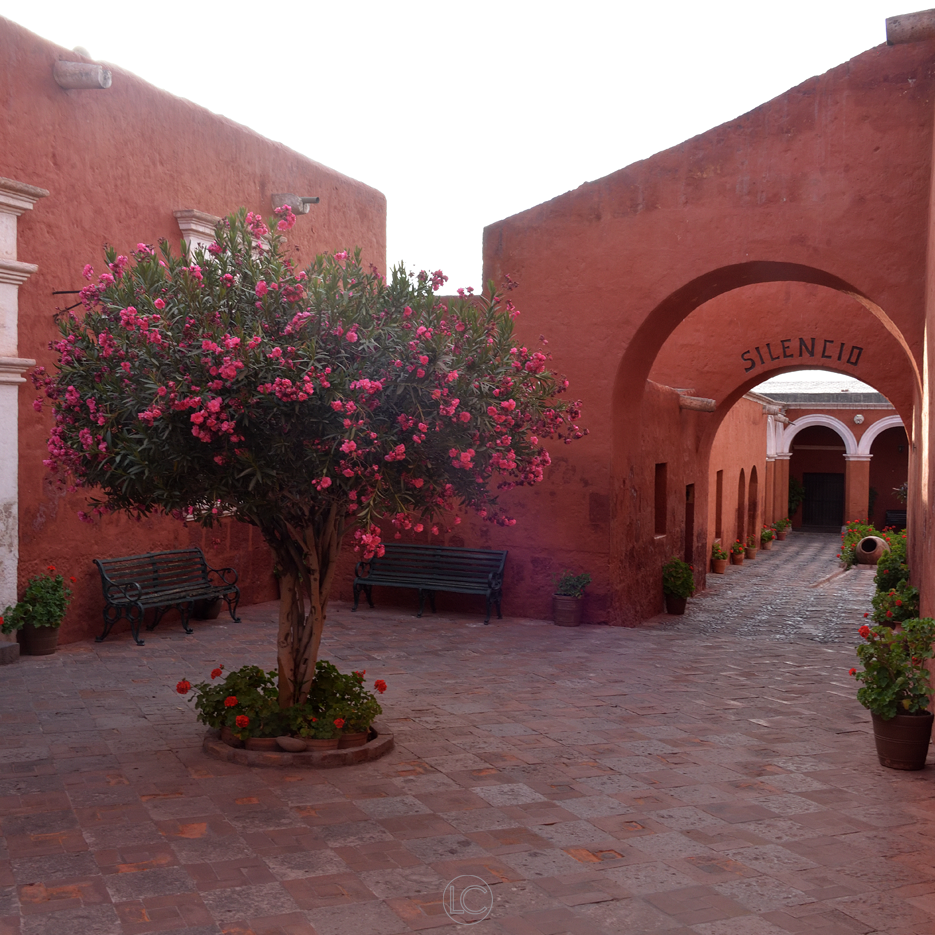
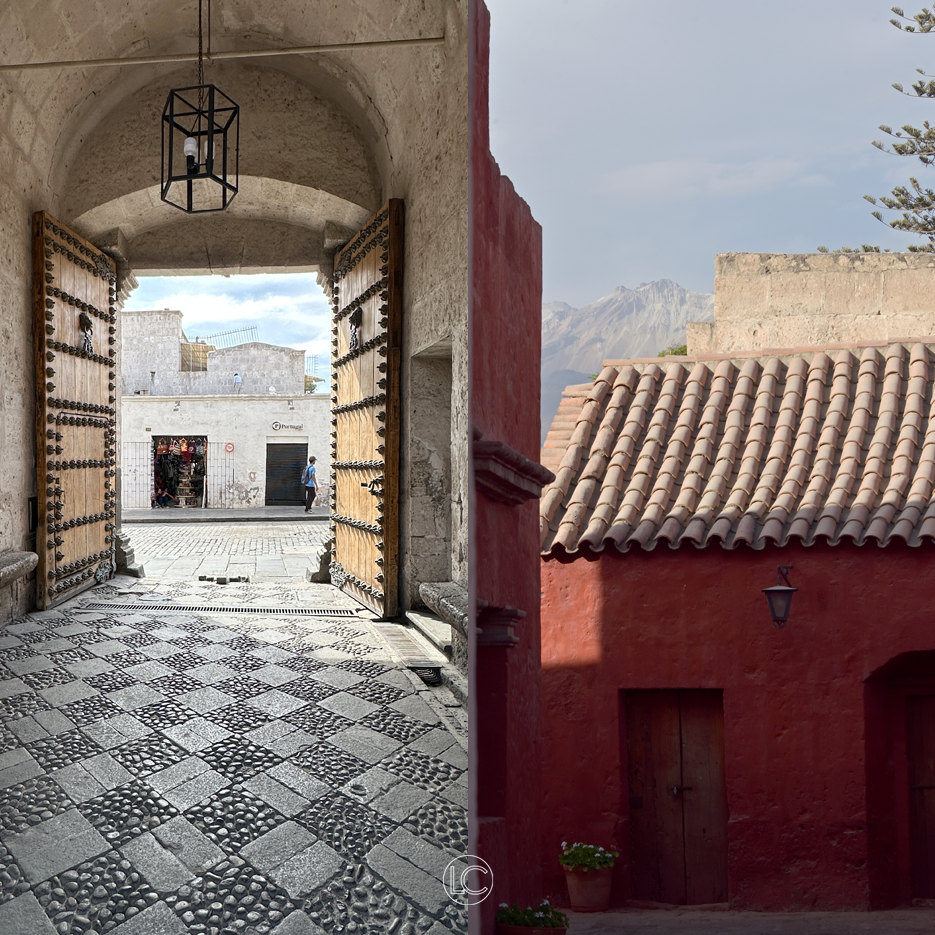
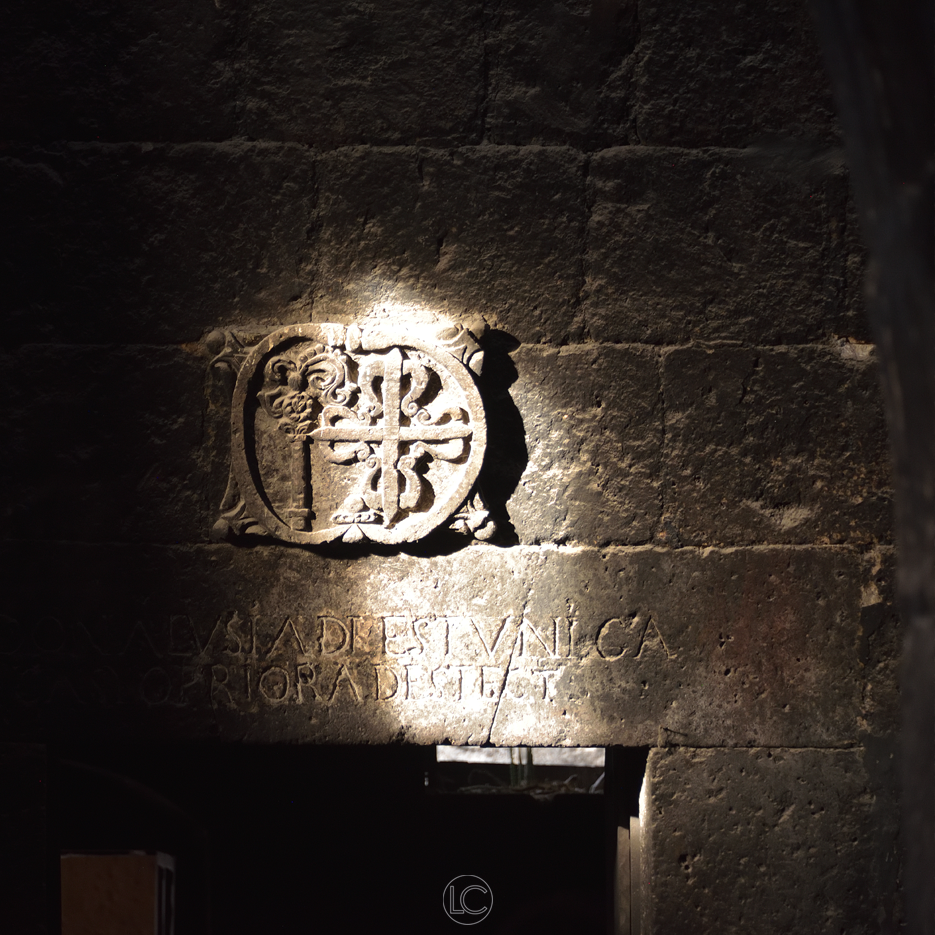
From Mercado San Camilo, we made a beeline to the Monasterio de Santa Catalina, Arequipa’s crown jewel. Dating back to 1579, Santa Catalina occupies more than 20,000 square meters and functions less like a convent than an entire enclosed city. It remained sealed from the outside world for nearly four centuries before opening to the public in 1970.
As we entered, a large arch, painted in terracotta, read silencio. While that could be read as devotional, Santa Catalina was also where the wealthiest families paid enormous dowries to place daughters at as young as twelve or thirteen, often a symbol of status for the father. Yet this was one of the very few places in colonial Peru where women could receive an education, become literate, and live free from marriage and the colonial patriarchy.
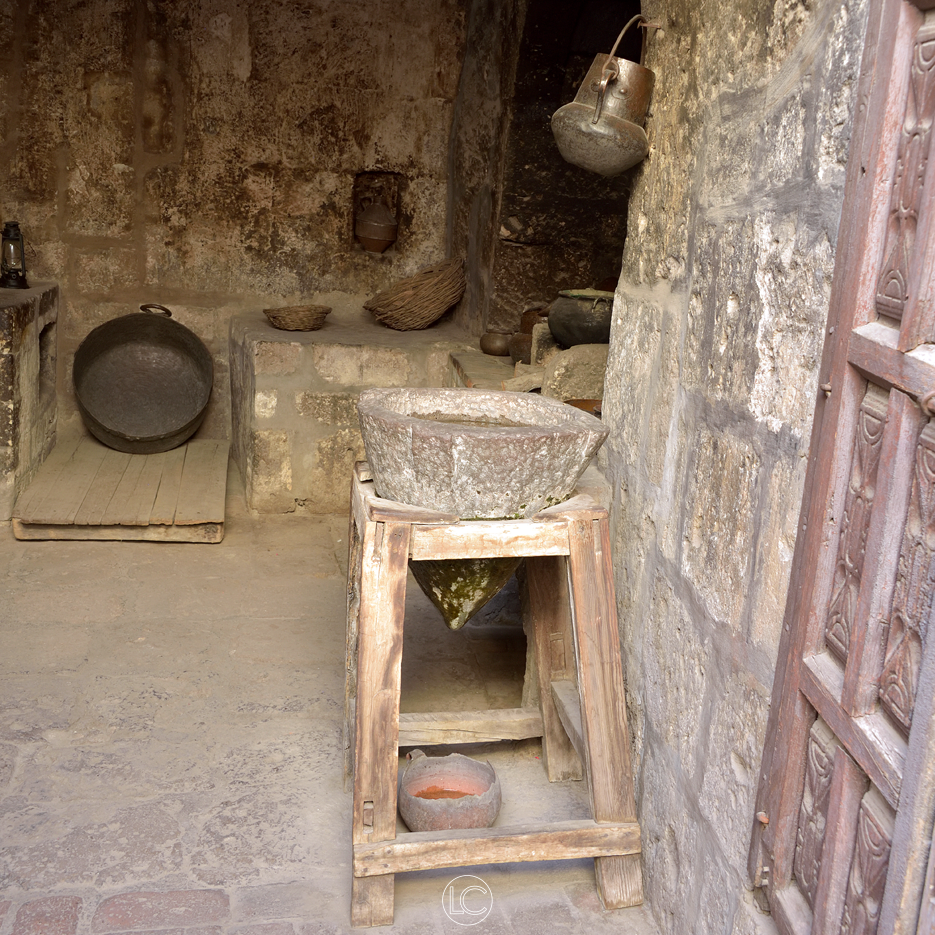
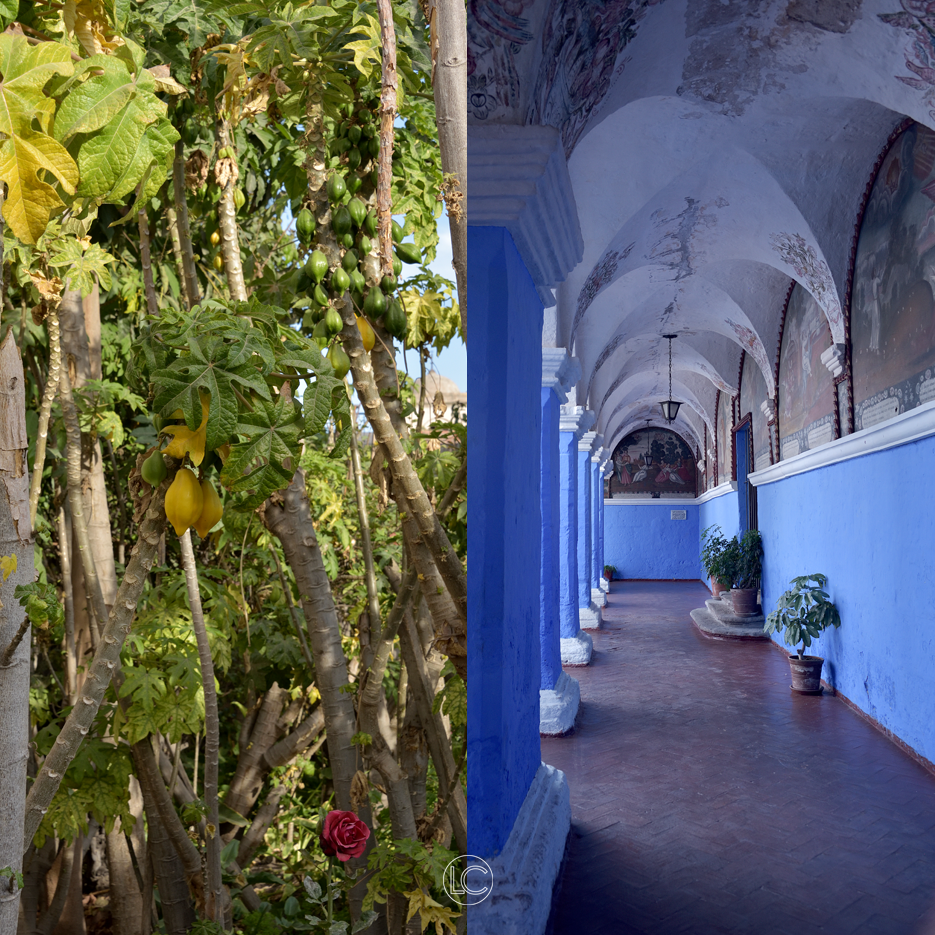
The intensity of the colors from one area to the next — saturated shades of terracotta, indigo, cobalt, and burnt orange — created this constant oscillation between brightness and enclosure, joy and melancholy. At moments it felt devotional; at others, strangely domestic. Behind its massive walls were streets, plazas, kitchens, fountains, chapels, gardens, laundry areas, cemeteries, and individual living quarters where women entered with servants, artwork, porcelain china, and spacious apartments. Others lived in far more modest cells. The hierarchies of colonial society reproduced themselves almost perfectly inside the walls.
Leo ushered us through Santa Catalina and I kept thinking about Flora Tristán, the French-Peruvian writer and early feminist who traveled through Arequipa in the 1830s and wrote Peregrinations of a Pariah — one of the earliest detailed descriptions of Santa Catalina and a sharp criticism of the constraints placed on women in colonial Peruvian society. Tristán called herself une paria — a woman with no legal standing, no inheritance, no recourse. She saw in the convent walls what I was feeling walking through them: the architecture of a world that educated women only by enclosing them.
The convent felt suspended between refuge and confinement — one of the only doors open to a woman seeking a life of the mind, yet still entirely shaped by the structures that limited her freedom in the first place. I felt furious at how limited the options were, yet there was also evidence of women building lives inside those constraints: organizing kitchens, preserving recipes, creating devotional art, educating one another, and maintaining traditions that still survive today in the sweets prepared by the convent and sold in the gift shop.
I left Santa Catalina with a pit in my stomach. The best a woman could hope for in colonial Peru was an education inside a beautiful jail. And five centuries later, the fight for women’s education and agency still isn’t over.
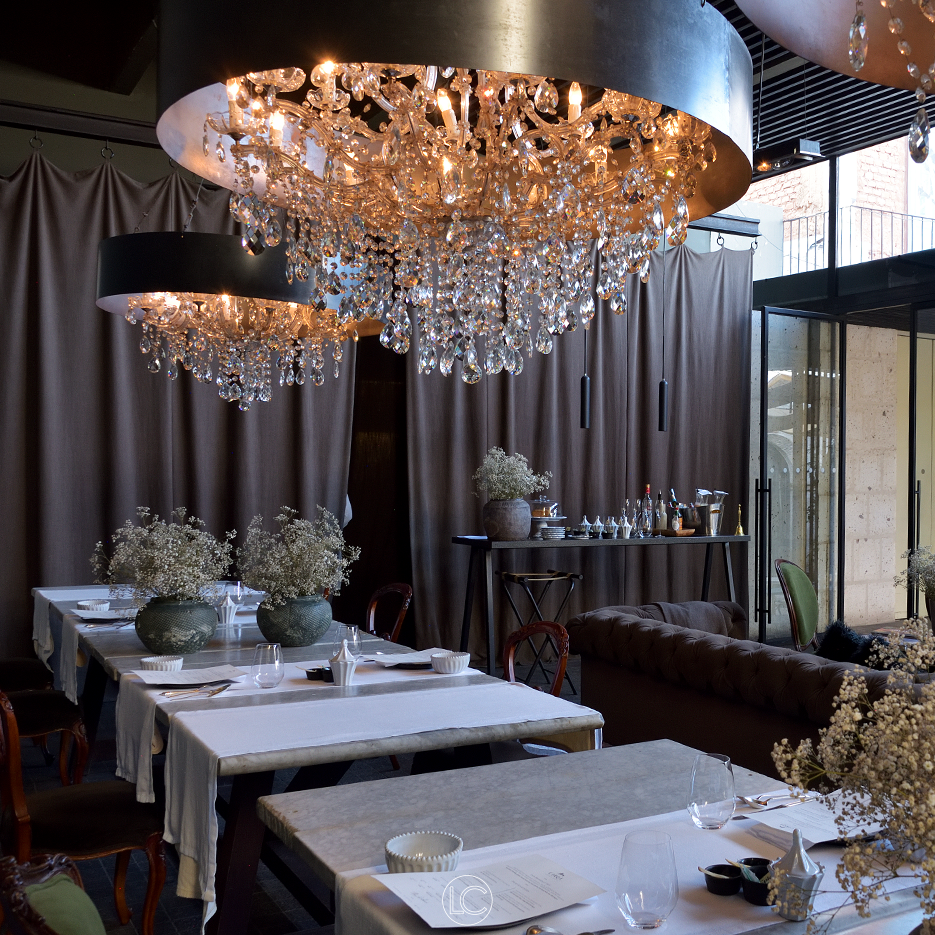
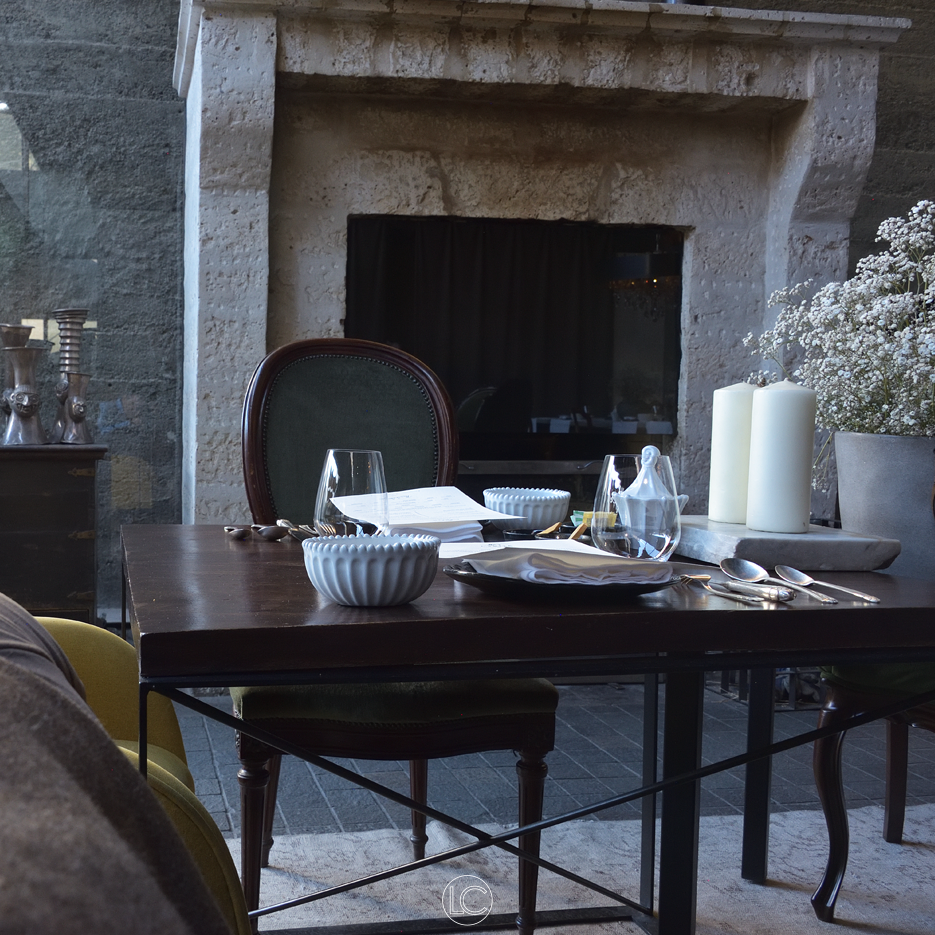
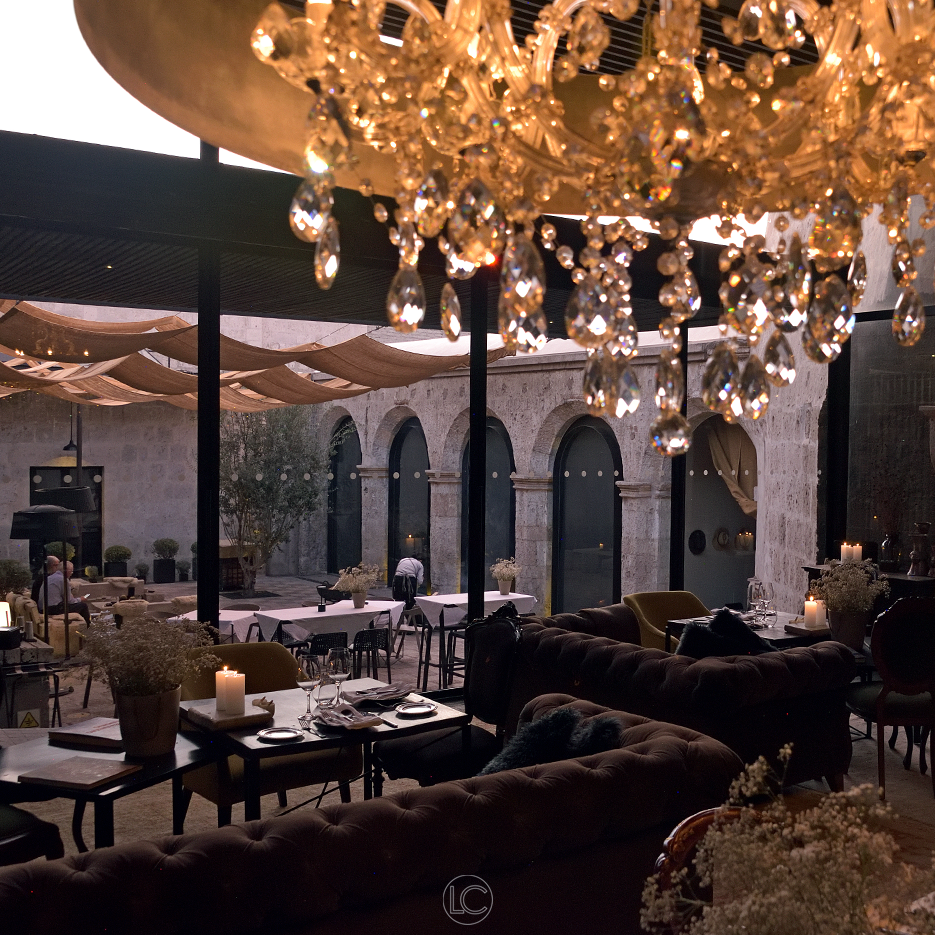
Glancing down at my phone, I saw we had hit 25,000 steps — literally a half marathon walking around Arequipa. My feet were tired with reason. The sun had already set and the sky was that deep indigo blue at twilight. We bid farewell to Leo and settled into Cirqa’s chic dining room with crystal chandeliers and velvet banquettes for cocktails and dinner in the form of little bites — baby stuffed rocoto peppers and the famous chupe de camarones, a rich river shrimp chowder.
What a day it had been. Perhaps a little too crammed, but that’s how work trips go sometimes. I could still feel the heat and intensity of the day — the rocoto chili, the white glare of the quarry, the silencio arch at Santa Catalina. Fiery, luminous, and layered — Arequipa had gotten under my skin.
The next morning, we were heading four hours north to the Colca Canyon, but that’s another story… coming very soon.
Un abrazo,
Liz