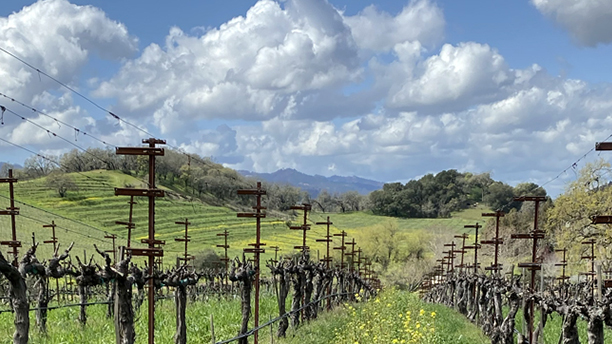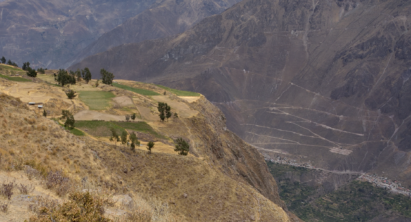
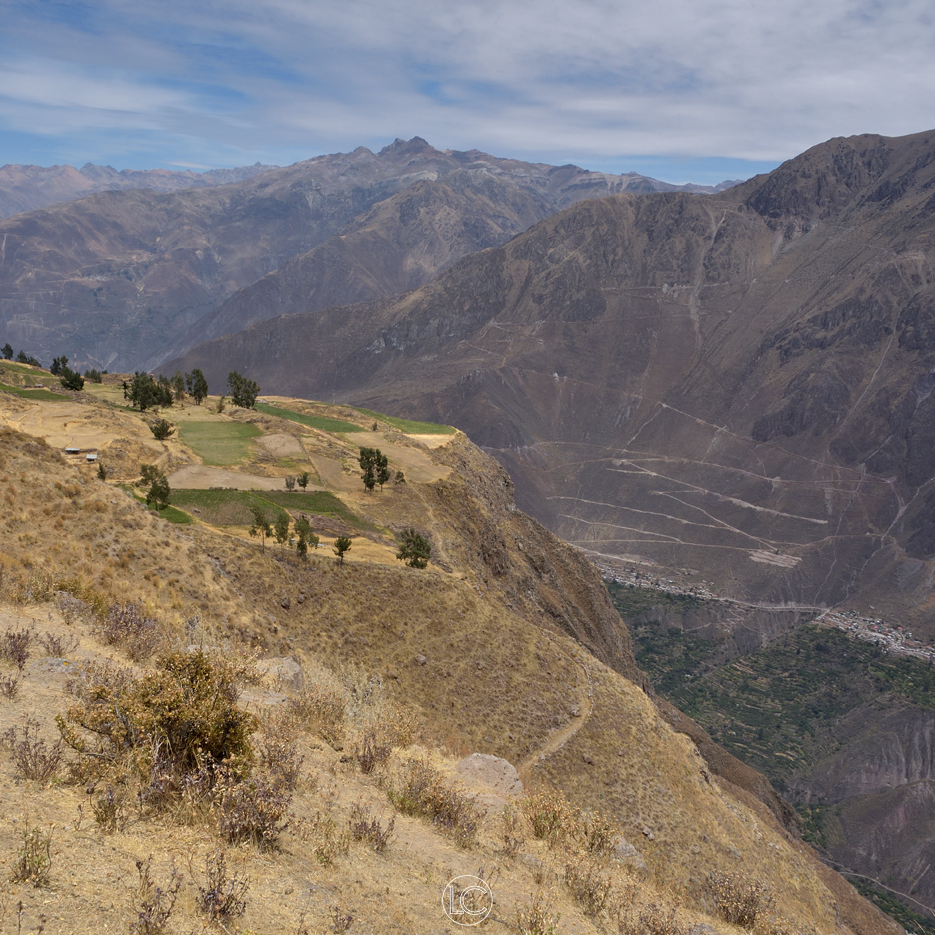
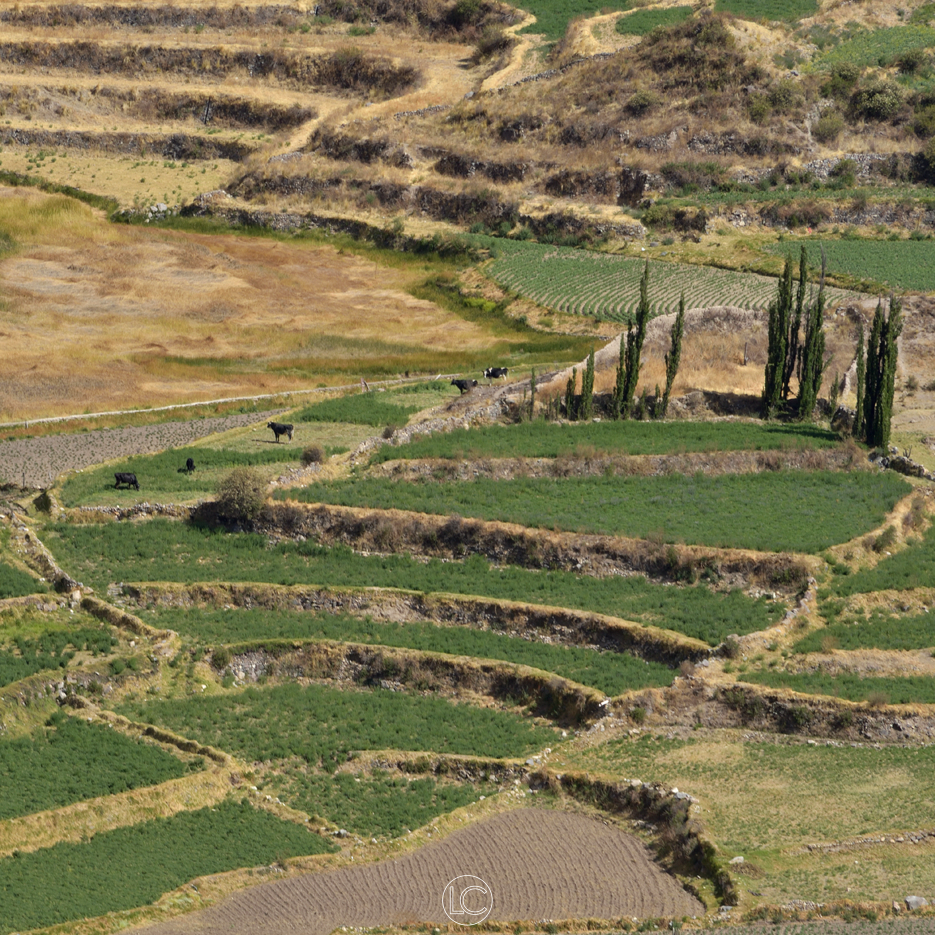
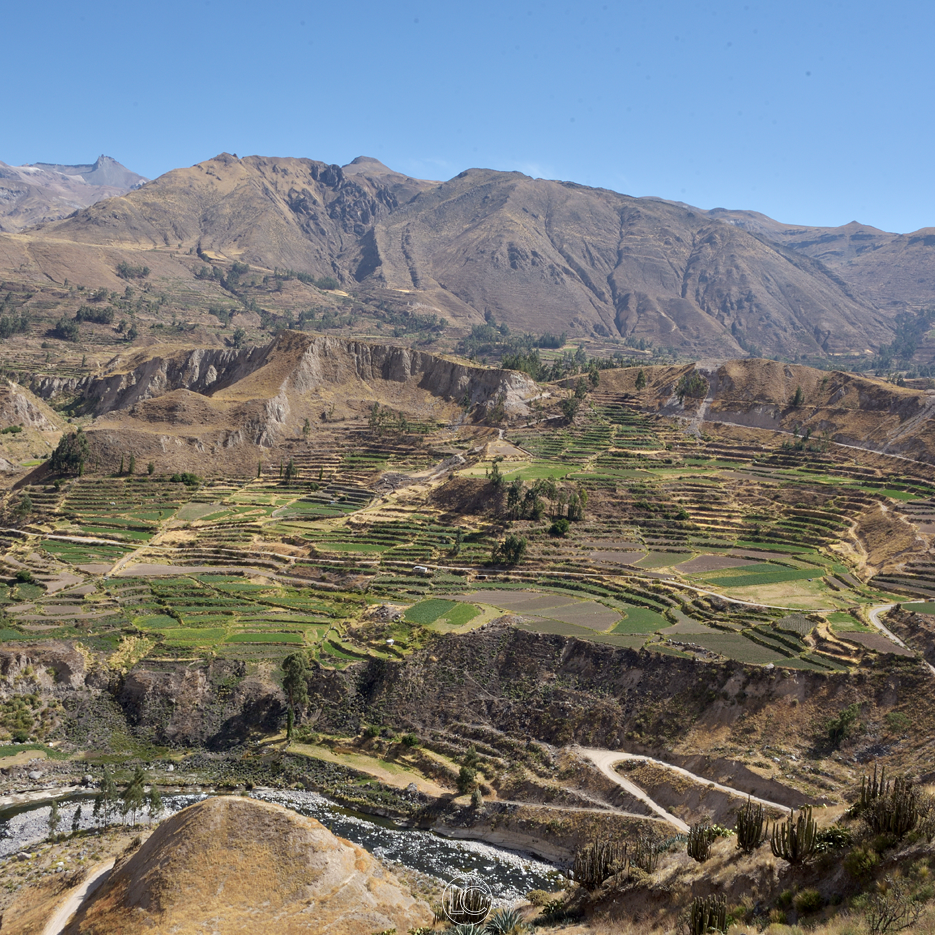
The sun catches the far side of the canyon, illuminating the hills like a golden spotlight from above. Standing in the cool shadows across the valley, the terraces look like long horizontal lines climbing the slopes. They follow the contour of the mountain, interrupted by scrub, cacti, and clusters of eucalyptus. There are hundreds, maybe even a thousand, terraces in plain view. Some are green with crops growing, others golden-brown from drying corn stalks.
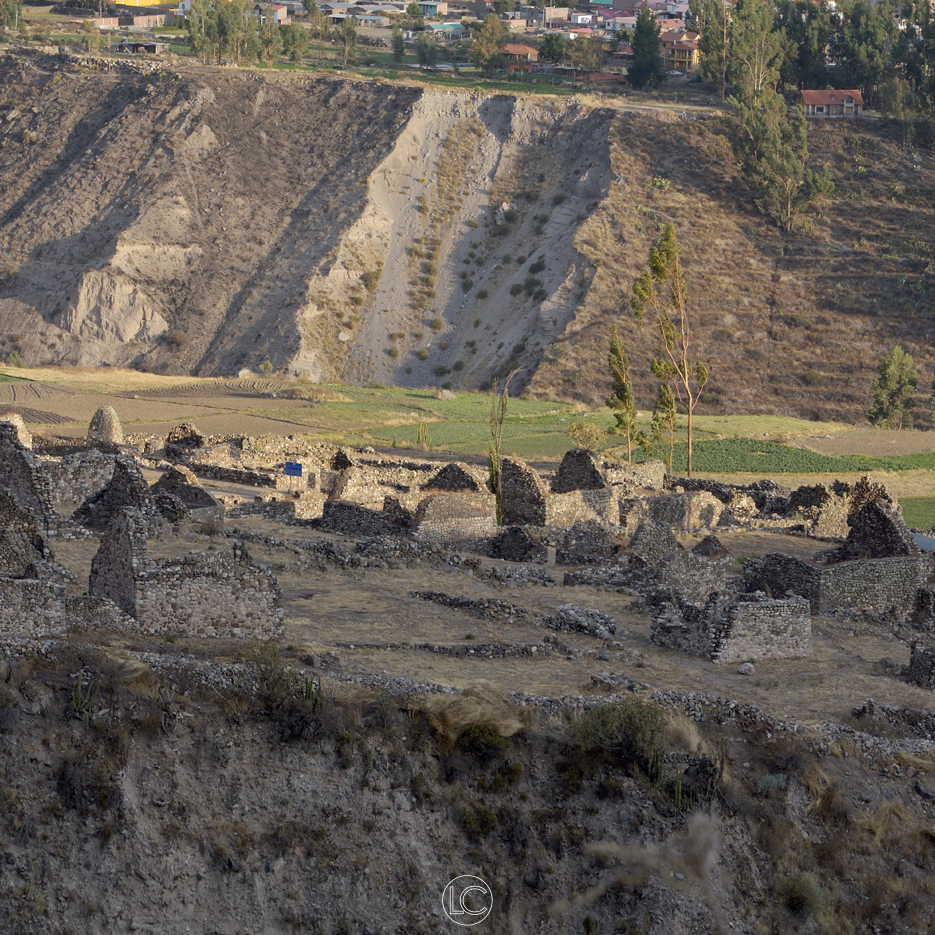
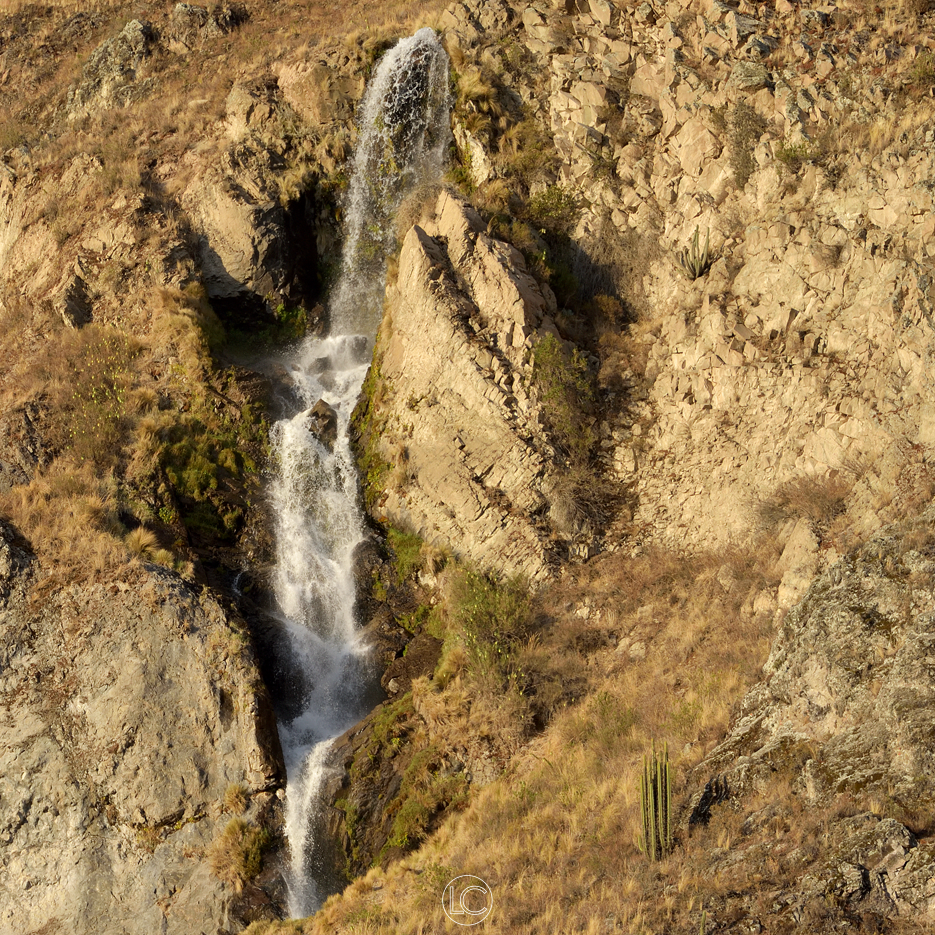
I crane my neck to see a waterfall cascading above and behind. The falling water is channeled into the ancient irrigation system, part of the Uyo Uyo ruins in the Colca Canyon. We are on a sundowner hike to move our legs after the long drive and trying to acclimate to the nearly 12,000 feet above sea level. The oxygen definitely feels thinner here.
When I first traveled to Peru — Cusco — in 2003, I remember finding a book about the Colca Canyon and its terraces in a librería off the Plaza de Armas. There was something about the geometry of the terraces, and the sheer amount of them, that I found fascinating. It was evidence of human hands carving a mountainside into farmland. I remember having that sensation, “Some day, I will go there.” And now, over two decades later, I was finally there.
Our guide, Freddy, who was born and raised in nearby Yanque, the cluster of white buildings in the valley below, explains that Uyo Uyo was a Collagua village — one of the pre-Inca peoples who built these terraces around 900 BC. When the Spanish arrived, they forced the population downhill into colonial grid towns during the reducciones, leaving the village emptied.
Freddy scampers down the narrow trail and stone steps adeptly. The densely packed stone structures look more like little houses than temples and as I descend further, I encounter a melancholic donkey chained to a pole. His sweet, sad face breaks my heart and I fight with all my might not to free him right then and there.
It’s twilight now, the last light clinging to the western horizon. In the distance, the Sabancaya volcano sends a plume of smoke into the darkening sky. On our way to Colca, our driver burned herbs as an offering to Pachamama before we climbed to nearly 16,000 feet en route to Colca where we saw the same volcano roar. Standing here, watching the earth literally exhale, it doesn’t feel like a ritual. It feels like she’s alive — and very present.
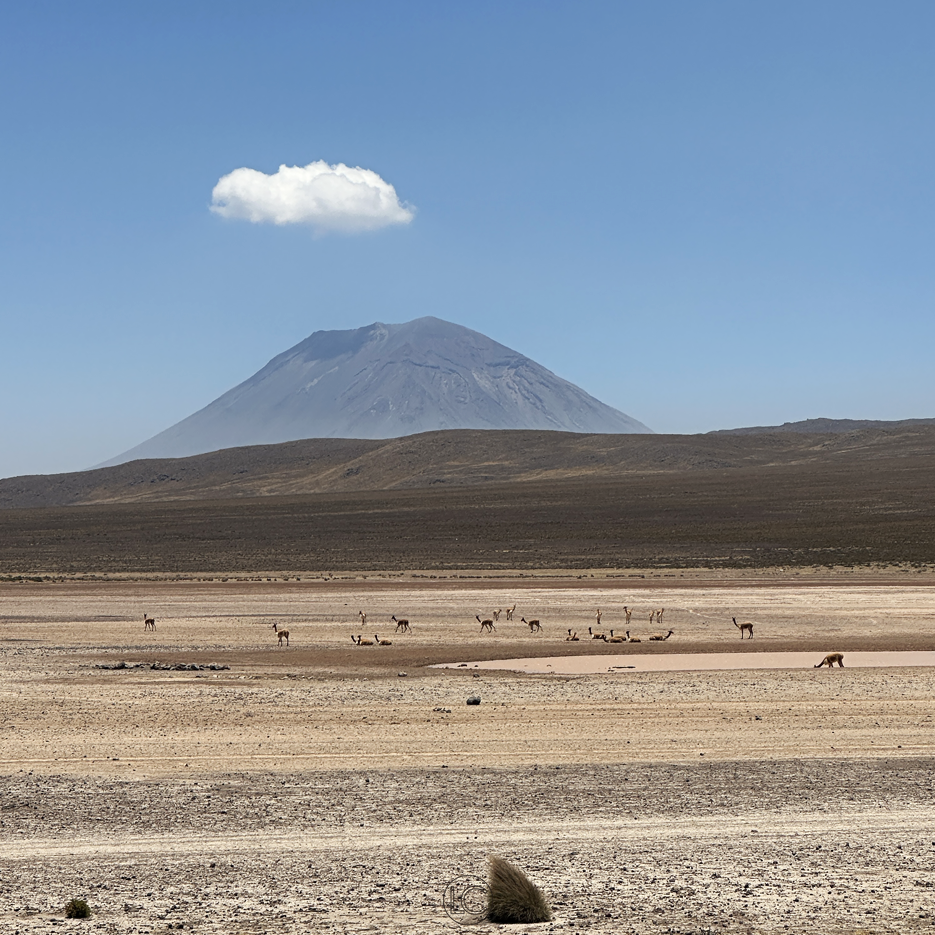
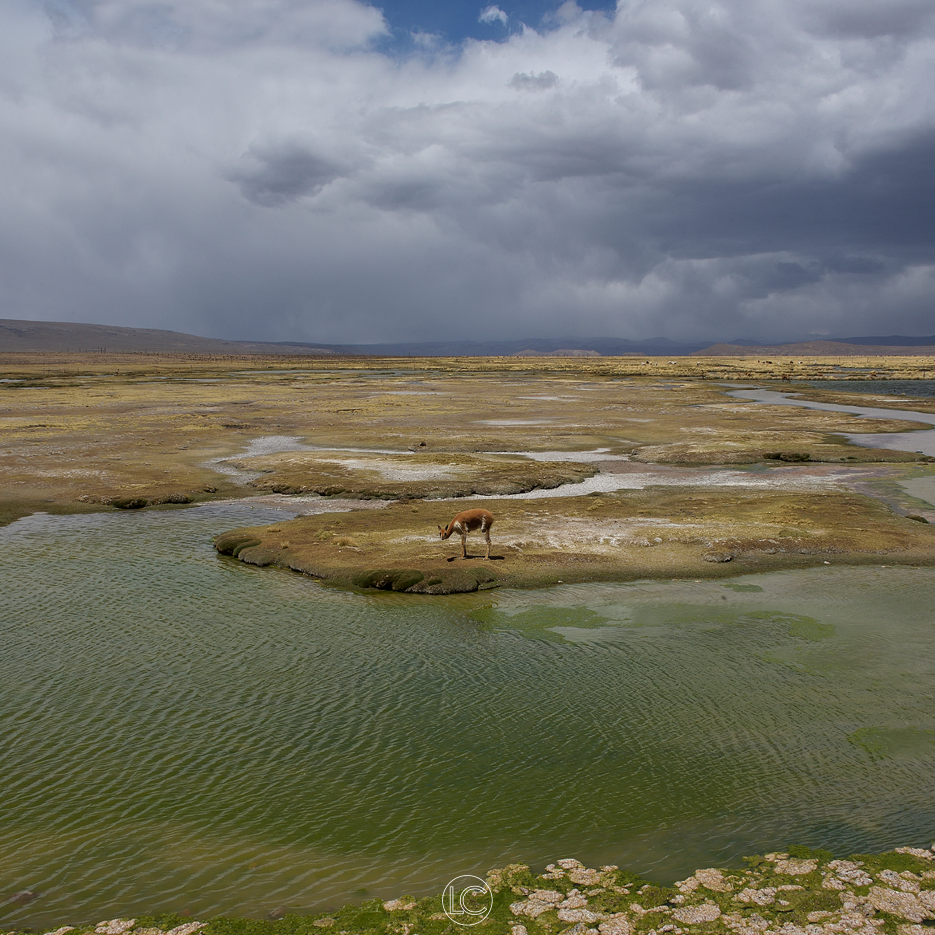
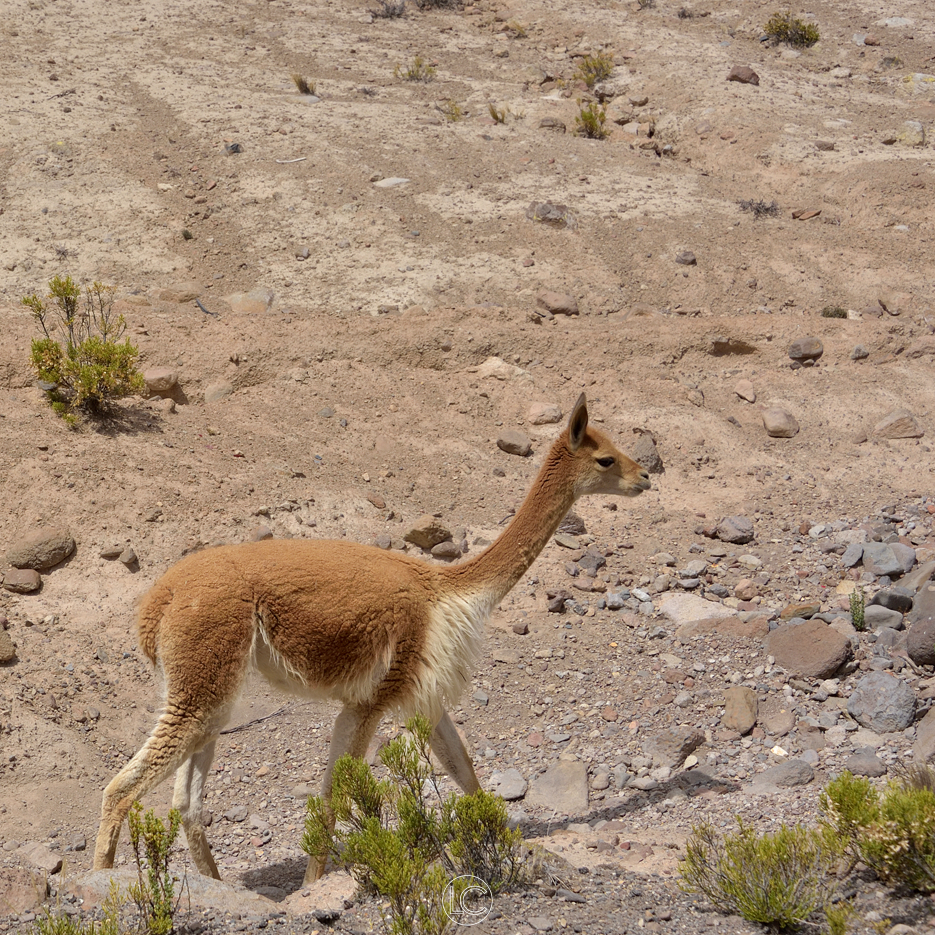
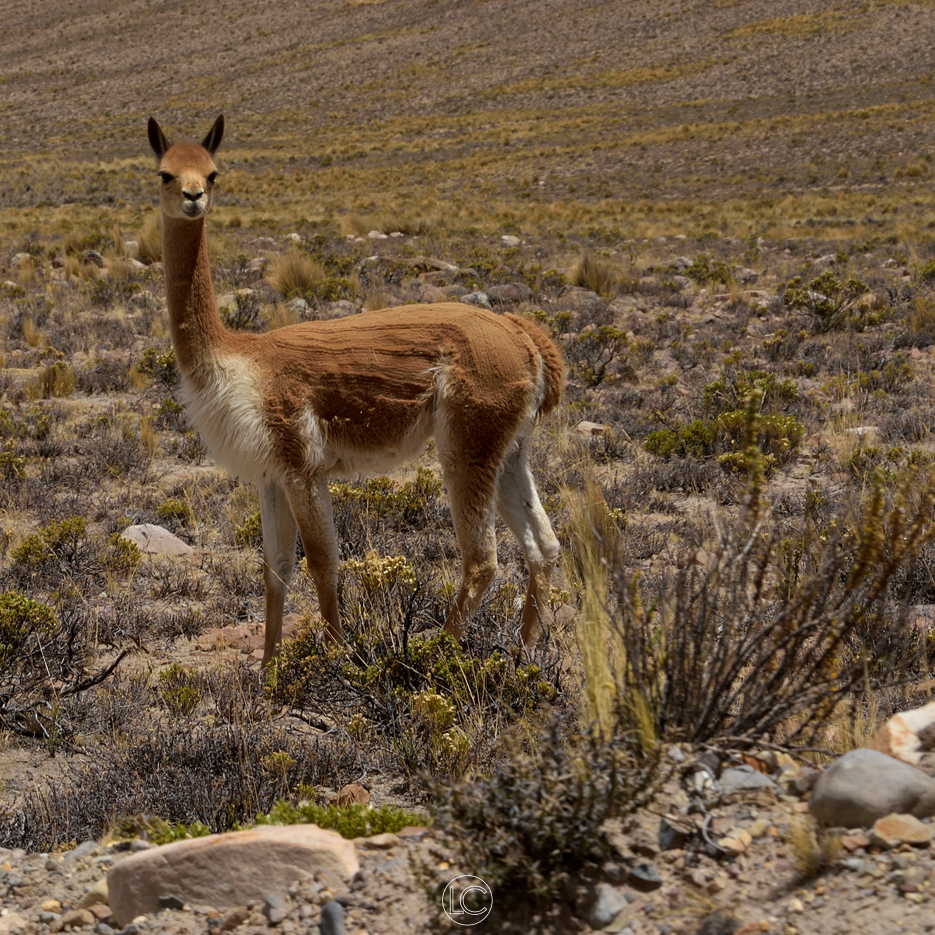
That same morning had left Arequipa heading north with heavy truck traffic on a windy two-lane road. As he passed one semi after another, our driver explained the trucks were all heading towards Puno and the Lake Titicaca corridor. As we passed the Salinas y Aguada Blanca National Reserve, the three volcanoes near Arequipa (Misti, Chachani and Pichu Pichu) came into full view along with hundreds of vicuñas. Part of the cameloid family, in Peru, vicuñas are wild, protected, and their wool is among the most precious fibers on earth. Here they were simply grazing, unhurried, against a backdrop of the volcanic peaks.
Near Patahuasi, we exited towards Chivay and our driver insisted we stop to drink a special tea brewed from Andean herbs like muña, coca leaves, and chachacoma — meant to ease the altitude before the road climbed to 16,000 feet at Patapampa Pass.
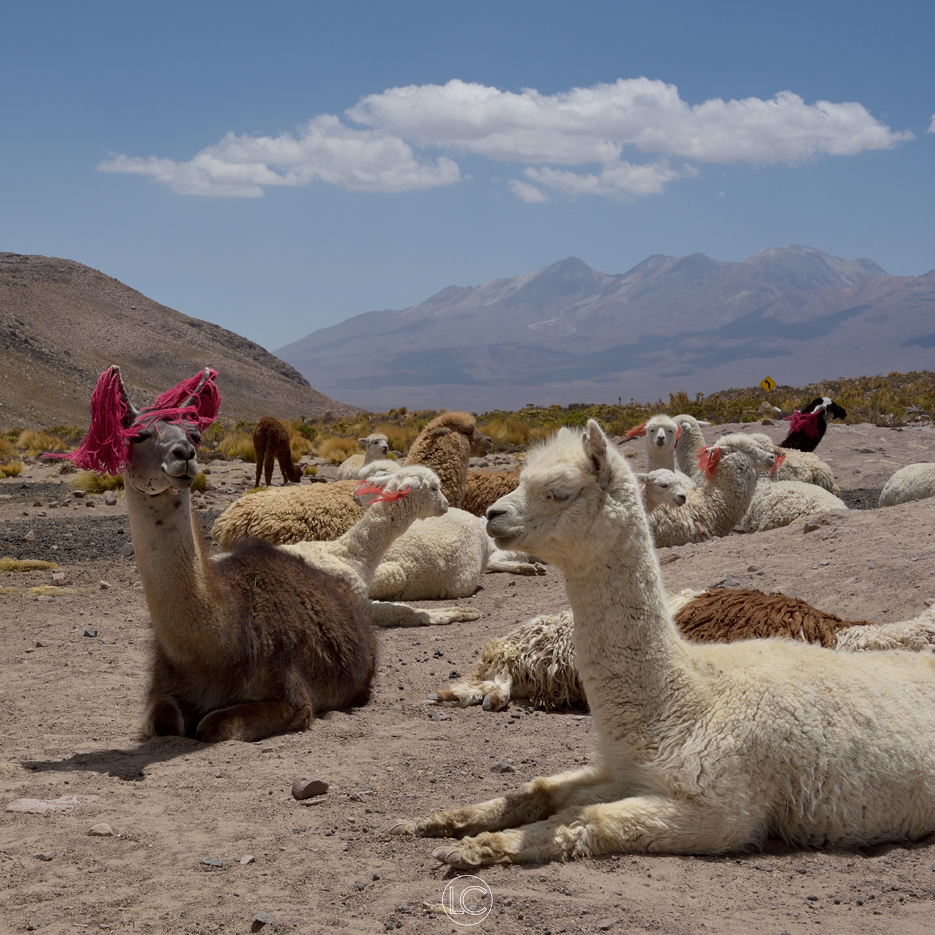
We passed a shepherd resting with her flock where the alpacas were decorated with wool pom-pom garlands on their ears, red and white, so her animals were identifiable from a distance. We continued past jade-green lagoons where vicuñas and alpacas had gathered to drink.
At Paso Patapampa, we reached the highest point of the journey. The entire cordillera stretched out in every direction, and in the distance, Sabancaya — erupting continuously since 2016 — was sending plumes into the sky. The pass was marked by hundreds of apachetas — small towers of stacked stones left by travelers as offerings, covering the plateau like a miniature city. At this altitude, the wind was biting cold, and even a short walk made me feel winded so we fled to the car to start our descent to Colca.
The remainder of the drive was long and nauseatingly curvy at times. As we dropped in altitude, the terraces began to appear. First a few, then dozens, then what felt like entire mountainsides restructured by human hands. There are an estimated 80,000 terraces in the Colca Valley, built by the Collagua and Cabana peoples beginning around 900 BC — predating the Inca by centuries. The Inca expanded them, but the original engineering belongs to civilizations most people have never heard of. The people who farm them today are their descendants.
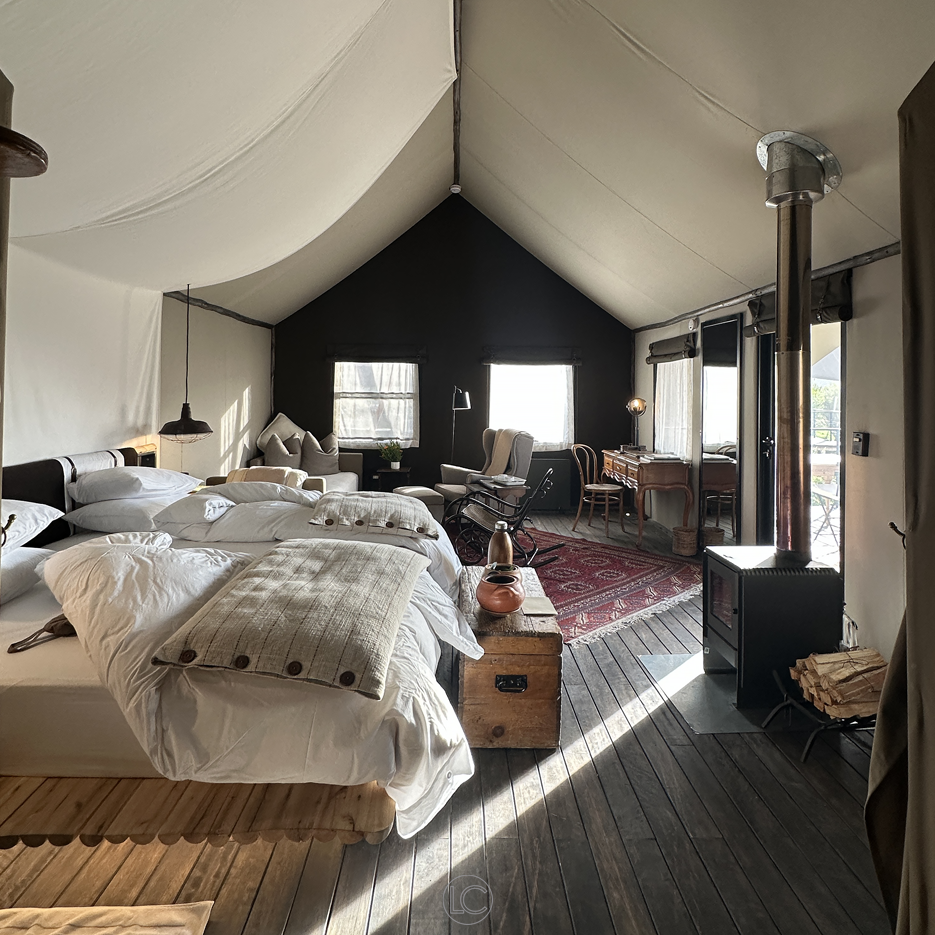
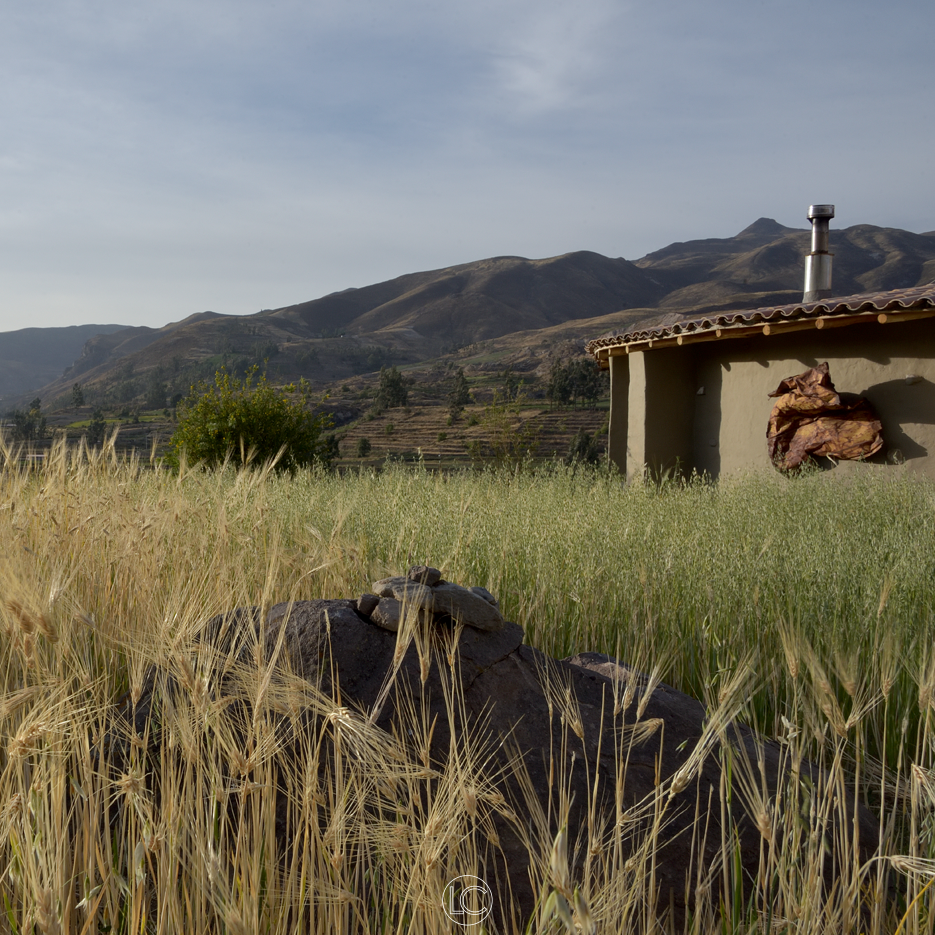
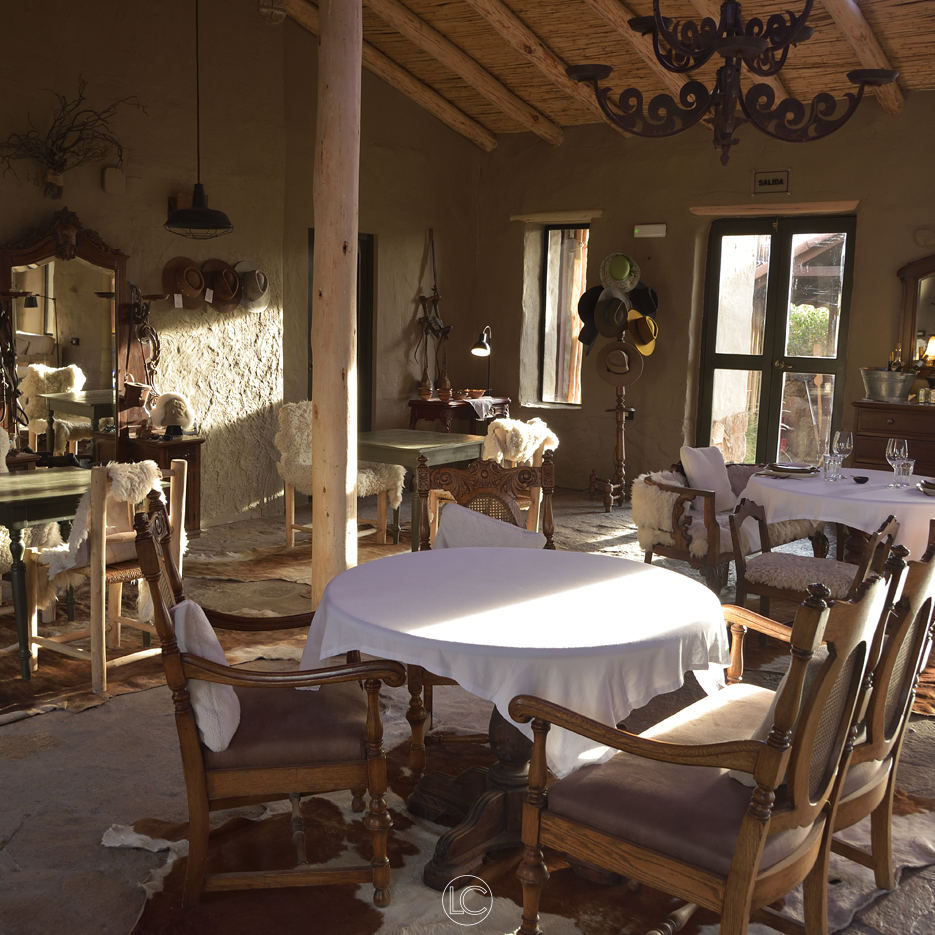
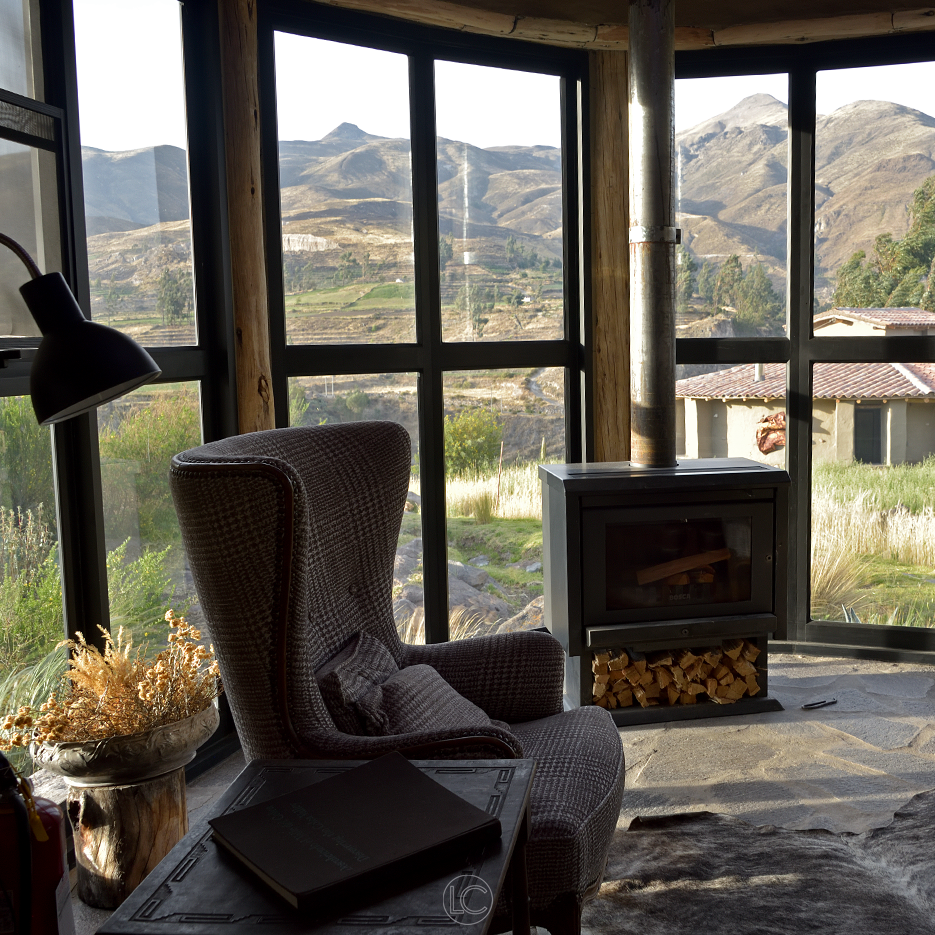
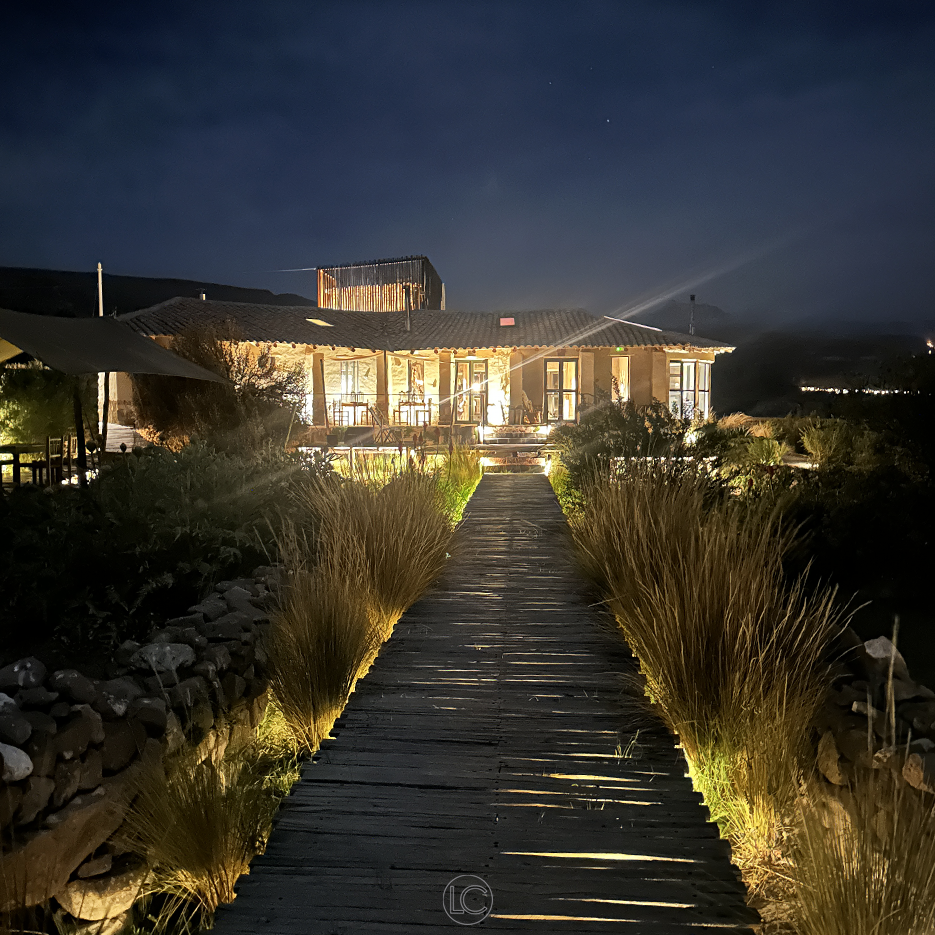
Now safely on the valley floor we passed many small chacras, farm plots, divided by rustic rock fences to arrive at Puqio — Peru’s first luxury tented camp. With the ethos of an African tented safari transposed to the Andes, the property sits a few miles outside the township of Coporaque, overlooking the river and the terraces, with bean fields and vegetable patches growing within its grounds. The aesthetic is 1930s expedition — explorer memorabilia, decor, bathtubs, and of course, the novelty of sleeping in a (well equipped) tent although there are a couple of adobe rooms on-site that overlook the canyon below.
By the time we arrived for lunch, the wind was rattling the windows in the main lodge with violent gusts.
“Es típico del valle” — it’s very common here — a voice said from behind. I turned to find a stocky, weathered man in his forties, wearing iridescent sunglasses, grinning at us with a big, soft smile. It was Freddy, our guide.
We sat down and ordered pisco sours made from prickly cactus fruit — citrus doesn’t grow at this altitude, so the prickly pear replaces the typical lime. I was dubious, but I can assure you, it was tasty enough to drink two. So much for my slow acclimatization game plan.
Much of the food at Puqio is grown on-site or sourced from the valley, cooked over clay ovens and open flame. The (heavenly) bread appeared daily and in rotating flavors from purple potato to amaranth grain.
While we waited for our meal, Freddy pulled up a chair and unrolled a large map of the canyon, tracing routes with his finger and mapping out the next day and a half. Somewhere up the canyon tomorrow, he said, he’d spot us a few condors.
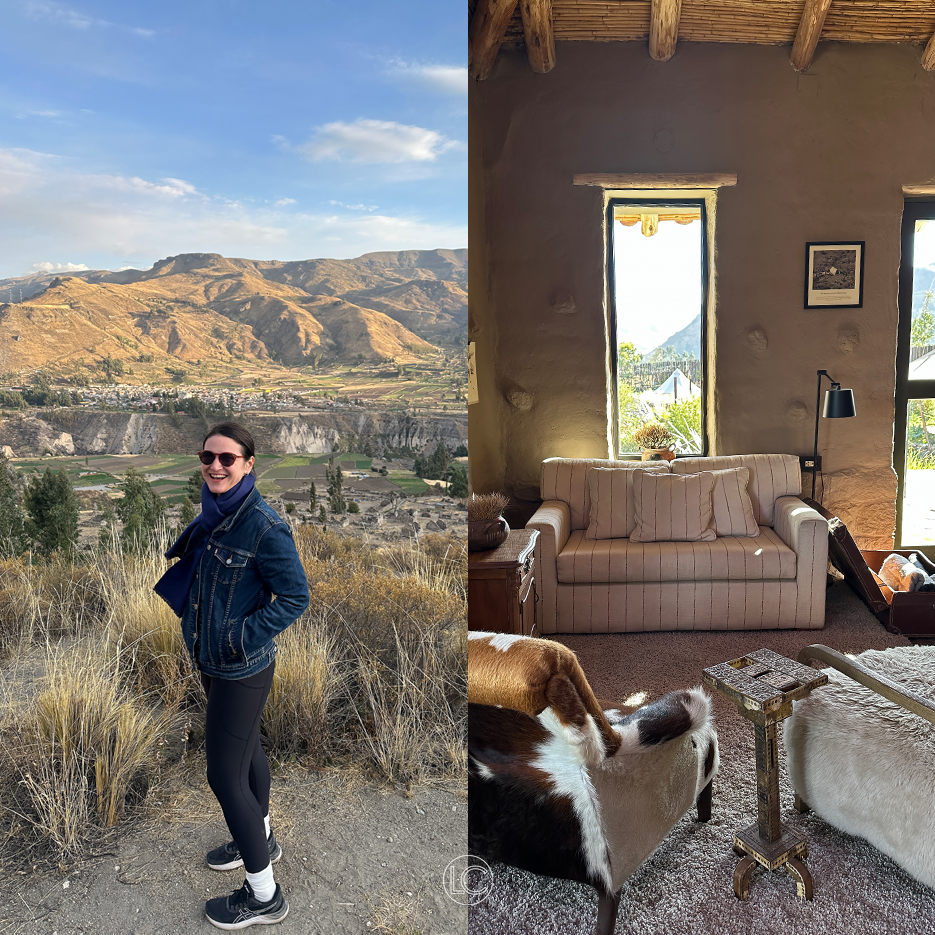
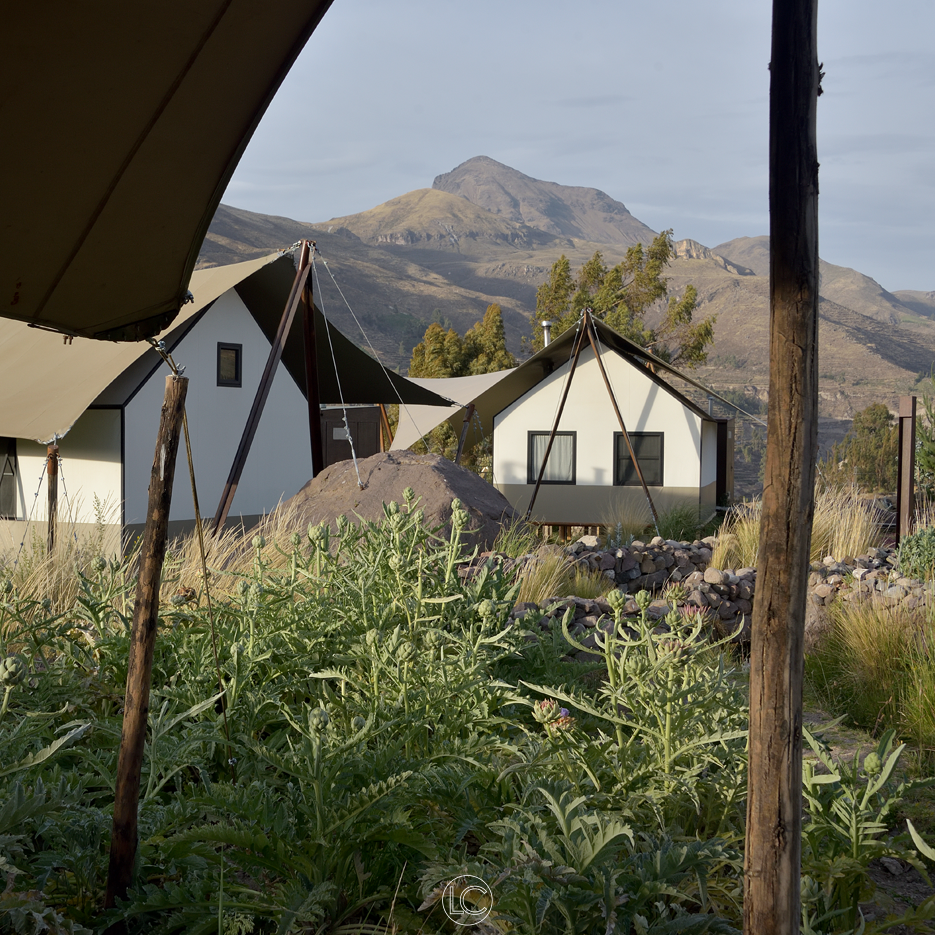
Fortunately, the next morning we woke to blue sky and calm wind. After a hurried coffee, we set off to search for condors. On our drive, Freddy shared that he grew up speaking Quechua at home with both his grandmother and mother. Many families, he explained, still speak Quechua at home and Spanish is often the second language.
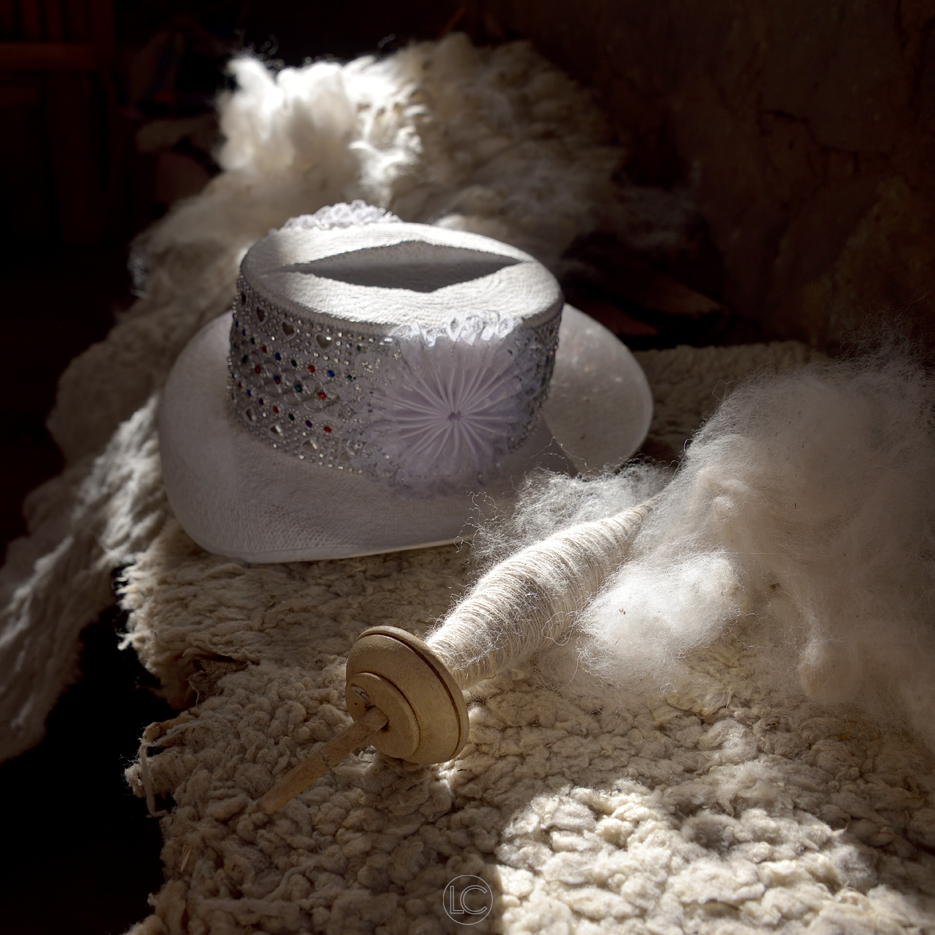
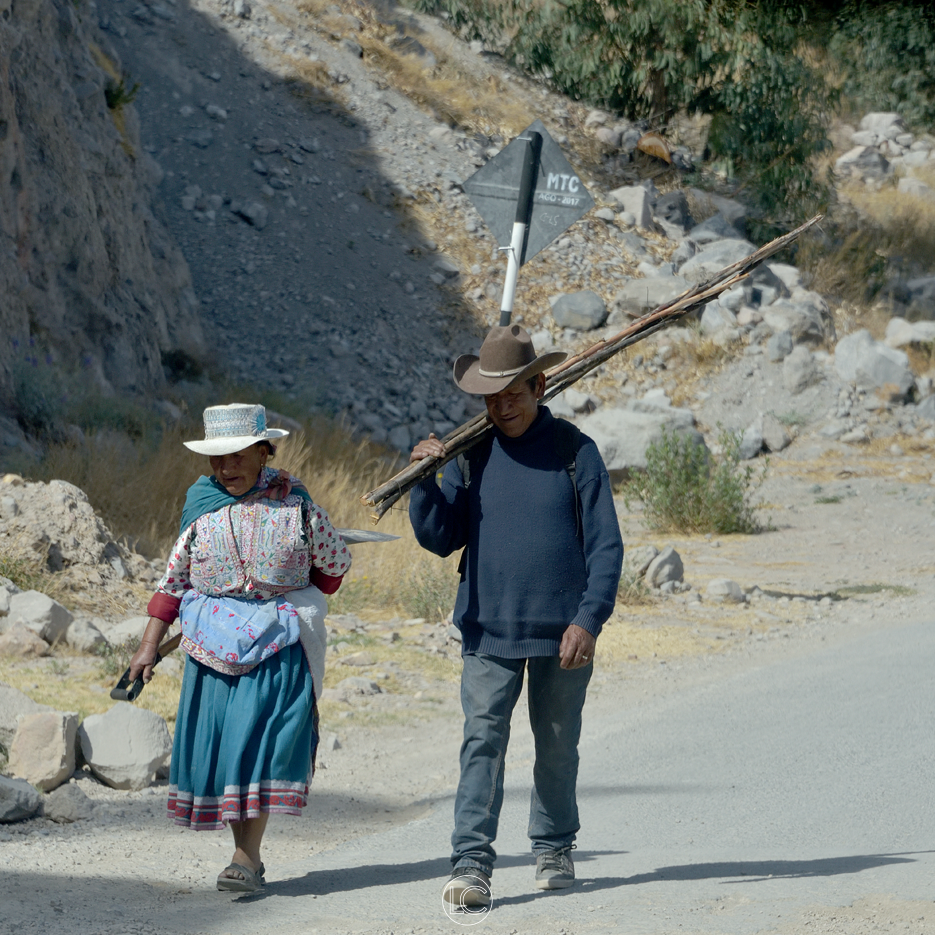
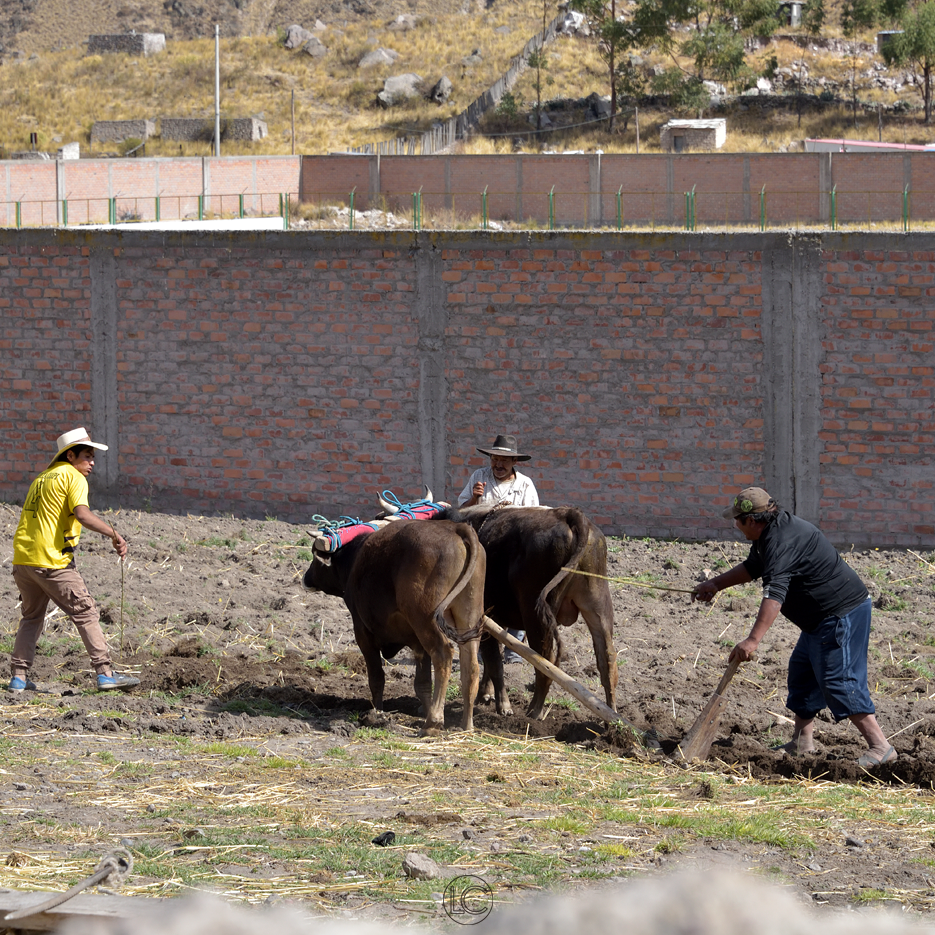
The road followed the natural contour of the mountains and the river flowing far below. Along the way we passed women walking in their traditional dress — flowing long skirts, embroidered blouses, and jeweled white bowler hats. Behind them, men carried metal poles or were guiding oxen. So much of life in the valley required back-breaking manual labor to sustain the agriculture.
“This is a crazy statistic,” Freddy said. “The second leading cause of death in the Colca Valley is electrocution.”
My husband and I exchanged a silent look.
“Many of these campesinos head up into the altiplano with their flocks and only a metal staff. Storms come across the Andes without warning, and with those rods, they’re often electrocuted…”
The road narrowed and we entered a tunnel — pitch black, no lights, no way to see oncoming traffic. A full minute of total trust that we’d make it to the light on the other side.
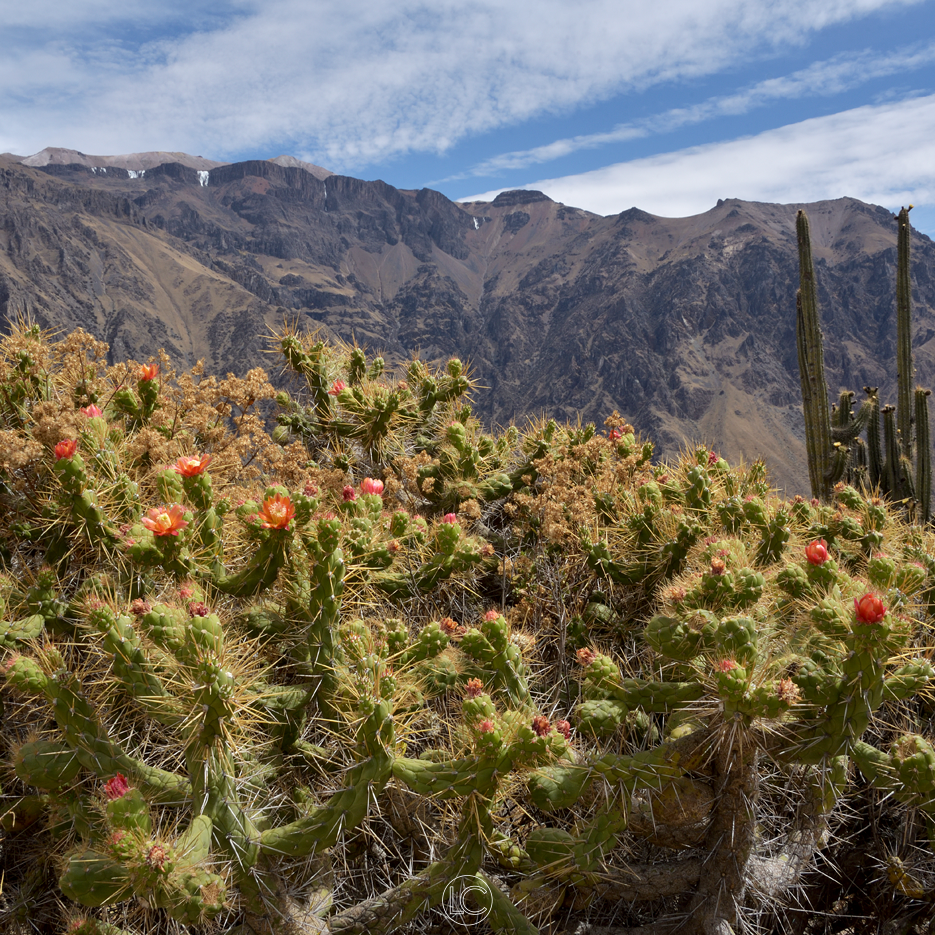
We emerged to cliff edges with no guardrails and a drop I stopped trying to measure. Wild horses grazed on the steep hillsides among thickets of columnar cacti. Freddy motioned to the driver to pull off.
“Probemos nuestra suerte” — let’s try our luck — Freddy said.
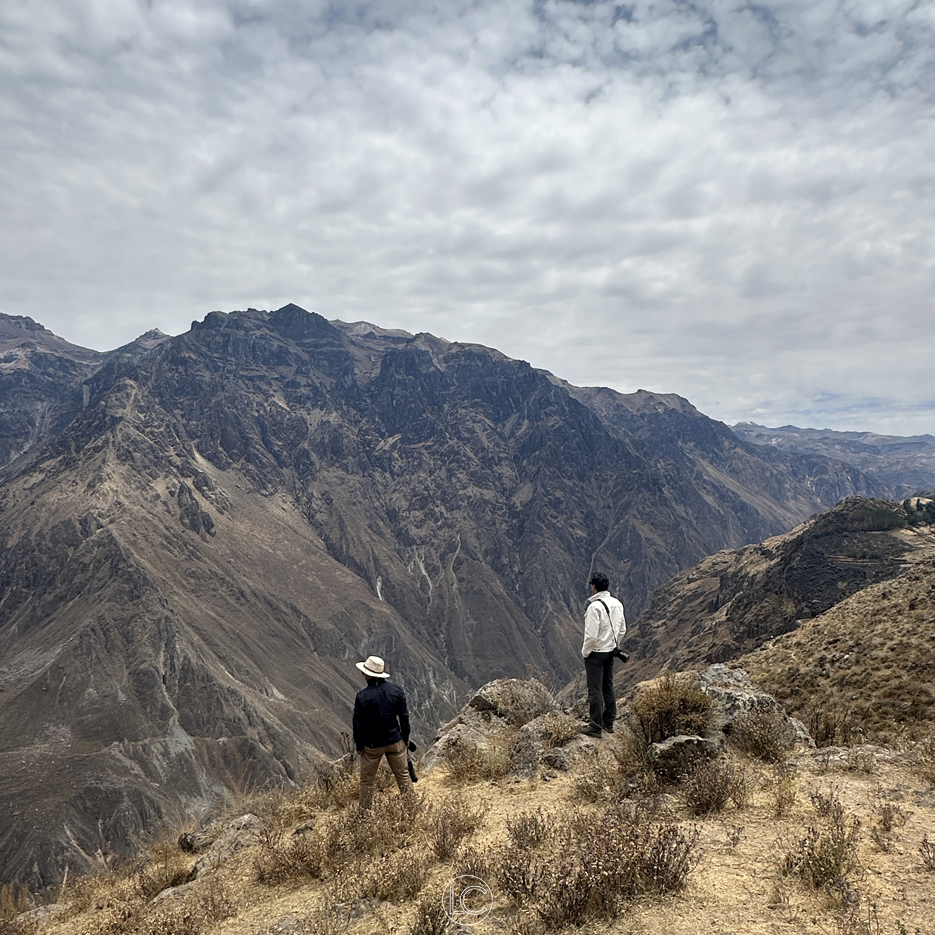
We walked along a pathway with scrubby cacti covered in startling orange-red blooms to arrive at the edge of the abyss where the canyon plunges close to a mile below. The sun was playing hide and seek with the clouds and it felt marvelously warm. Freddy surveyed the horizon with his binoculars, explaining that late November often brought fewer sightings with the thermal currents shifting and the young birds not yet confident in the drafts.
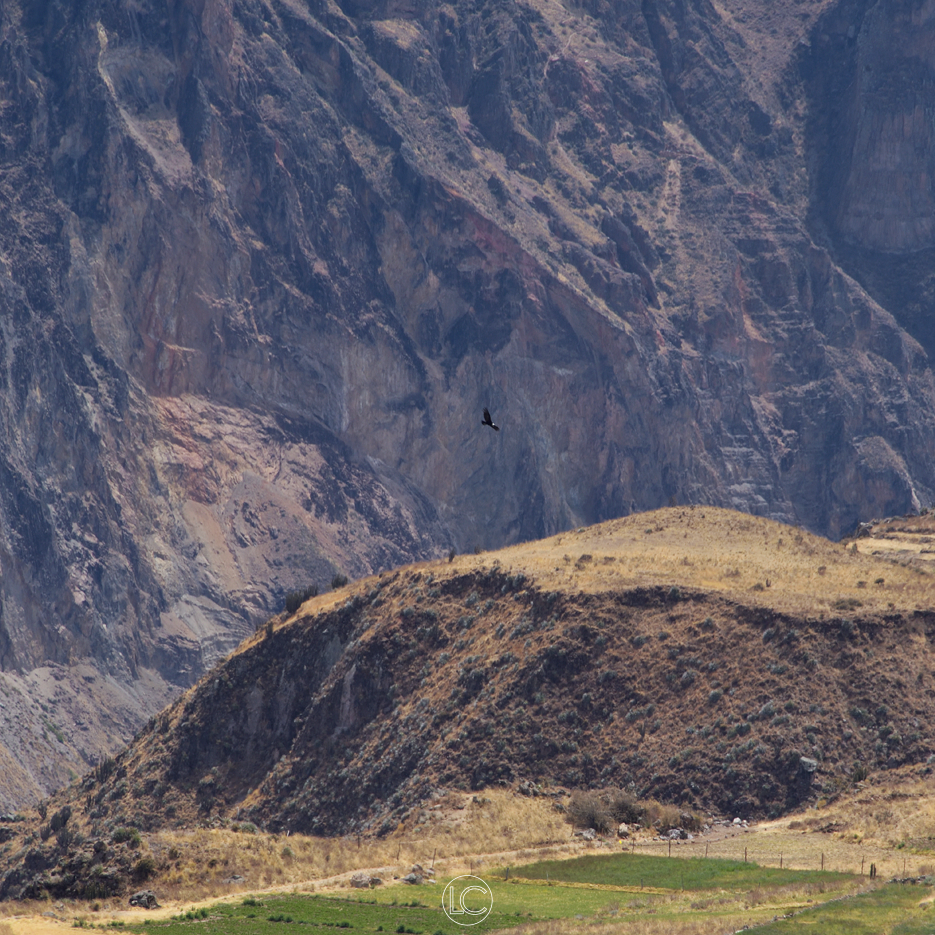
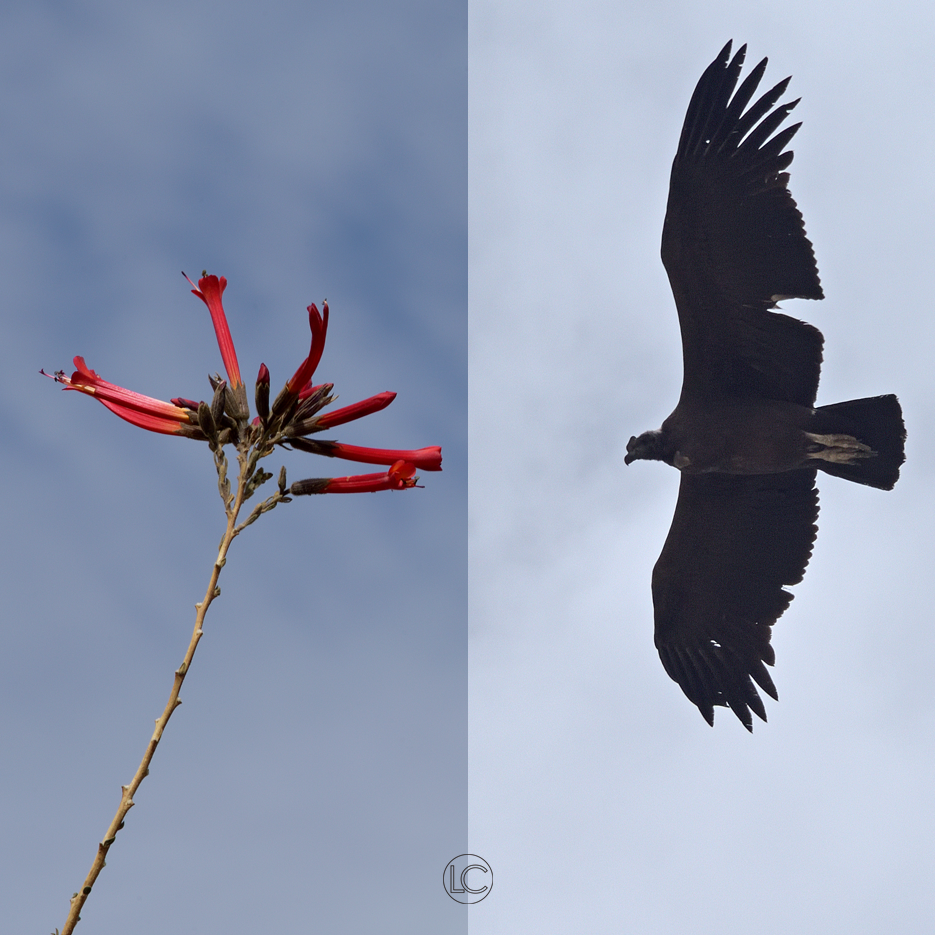
Then, in the distance a single condor was riding an updraft, climbing higher and higher until it was a silhouette against the clouds. Then another. And another.
Freddy got excited, the condors were out, and he knew a better location close by. No sooner did we step out of the car than a huge condor came swooping overhead from the canyon below. Enormous and silent, its wingspan blocked the sky for a moment. It spiraled higher and higher above us, eventually joined by another condor.
By the end of the morning, we had spotted a total of seven condors, two of them close enough to see the white collar of feathers around their necks without binoculars. The Andean condor is sacred in the cosmovision here, and seeing one that close rearranges your sense of scale. Later, back at Puqio, we learned that another couple who had gone out that same morning saw nothing. Freddy was our tracker — the kind of local guide who reads the canyon the way a safari spotter reads the bush. It made all the difference.
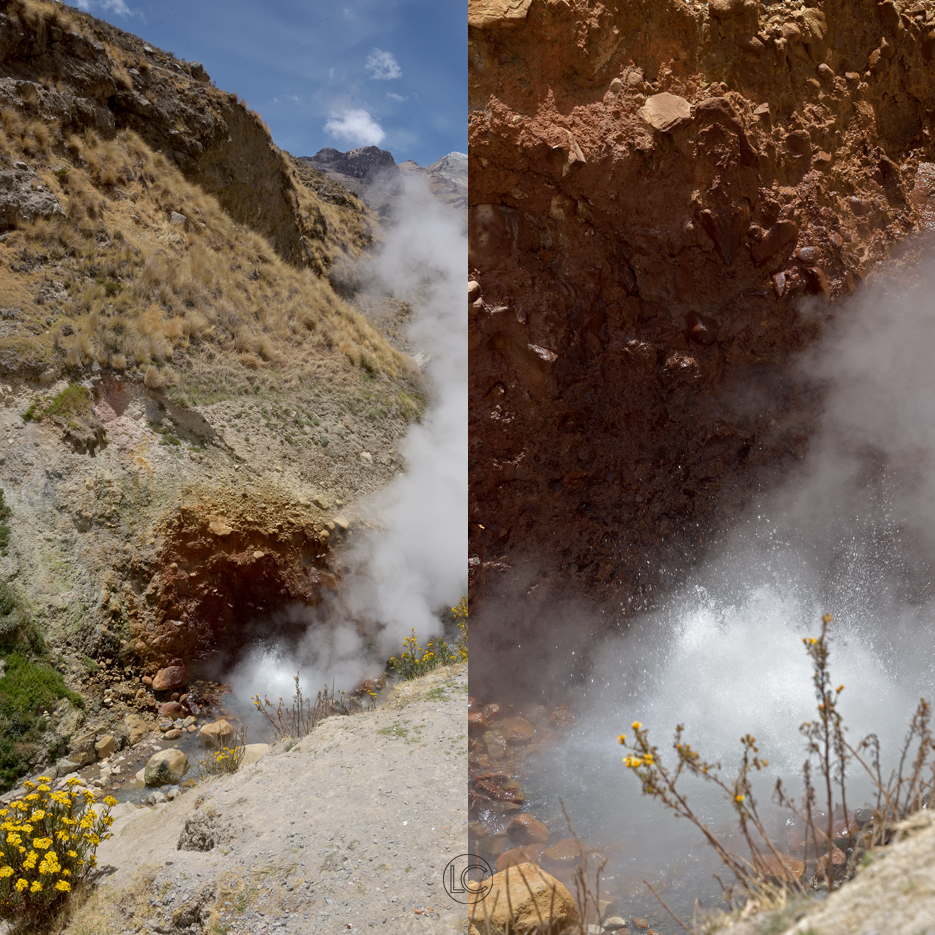
On the way back, we detoured off the main road at Pinchollo. A bumpy track climbed steeply — so steeply that the driver switched to 4×4 as we pushed past 13,000 feet. The smell of sulfur hit before we even had parked. Shades of yellow, iron red, and white calcium deposits looked dramatic against dark volcanic rock. The geysers gurgled and hissed through small steam vents all around.
Freddy cooked soft-boiled eggs in the geothermal water while we stood taking in the full panorama of the Andes. He pointed to a snow-capped peak in the distance: Nevado Mismi, the glacial source of the Amazon River. The ice that melts from its summit flows into streams that become the Apurímac, then the Ucayali, and eventually the Amazon itself. I stood there trying to take it in — the birthplace of the world’s largest river system, visible from a geyser field in southern Peru. Everything seemed to connect to something larger than itself.
An hour later, we savored the most flavorful fava bean soup followed by grilled Andean trout and fresh greens from the garden at the hotel. Of course, I couldn’t say no to another round of the prickly pear pisco sours. However, when the sommelier began pouring a Sauvignon Blanc I love from Mendoza, Freddy quickly intervened, reminding us (ok, me) that we needed to leave in fifteen minutes to visit the weaver in Chivay before the afternoon took another direction entirely…
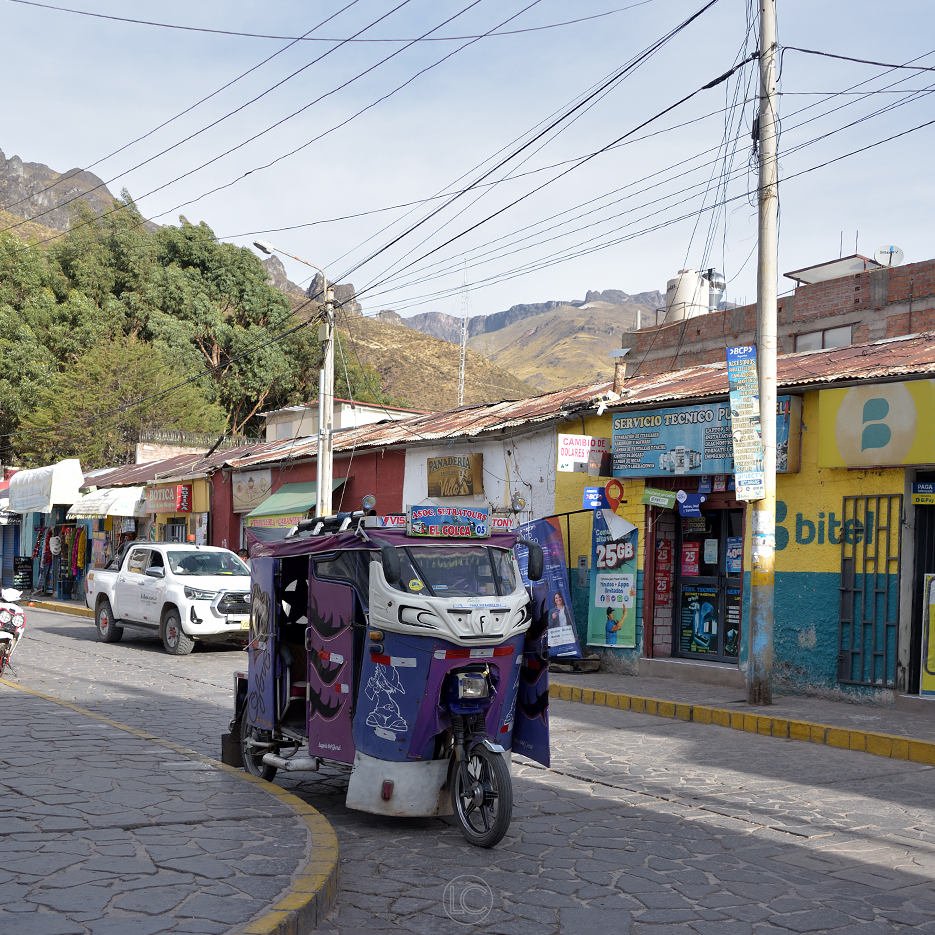
And so we went to Chivay, the largest town in the Colca Canyon with a whopping 6,000 residents, or at least the closest thing to a hub there. Centered around the main plaza, chalkboards advertised trucha frita and sopa criolla, and mototaxis buzzed through the streets like oversized insects. Many women wore the full traditional dress — embroidered vests, layered skirts, and wide-brimmed bejeweled hats. The contrast of ancient and modern, indigenous and global, was striking.
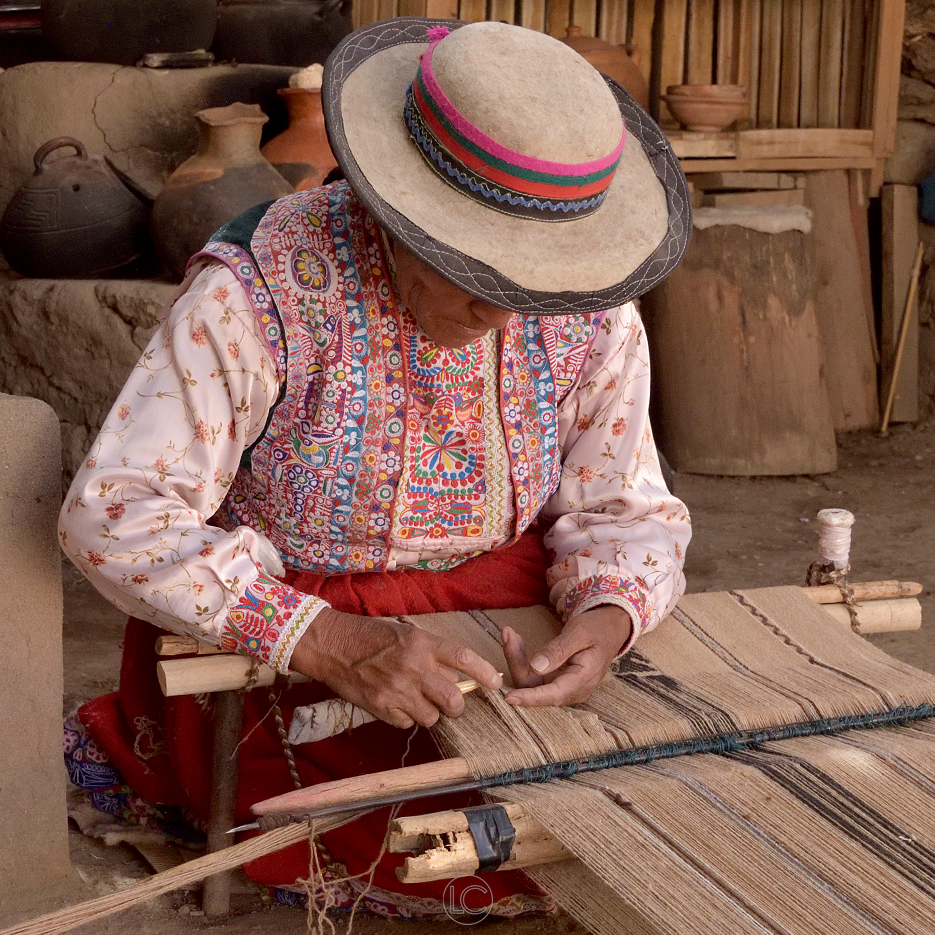
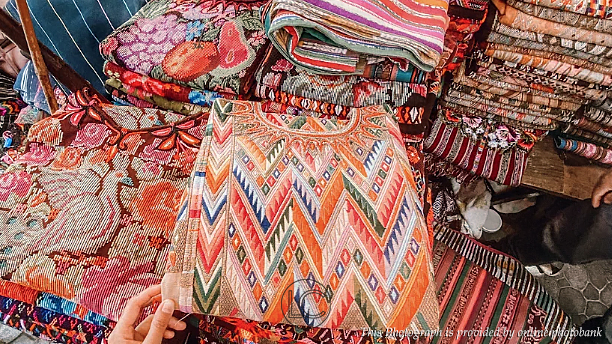
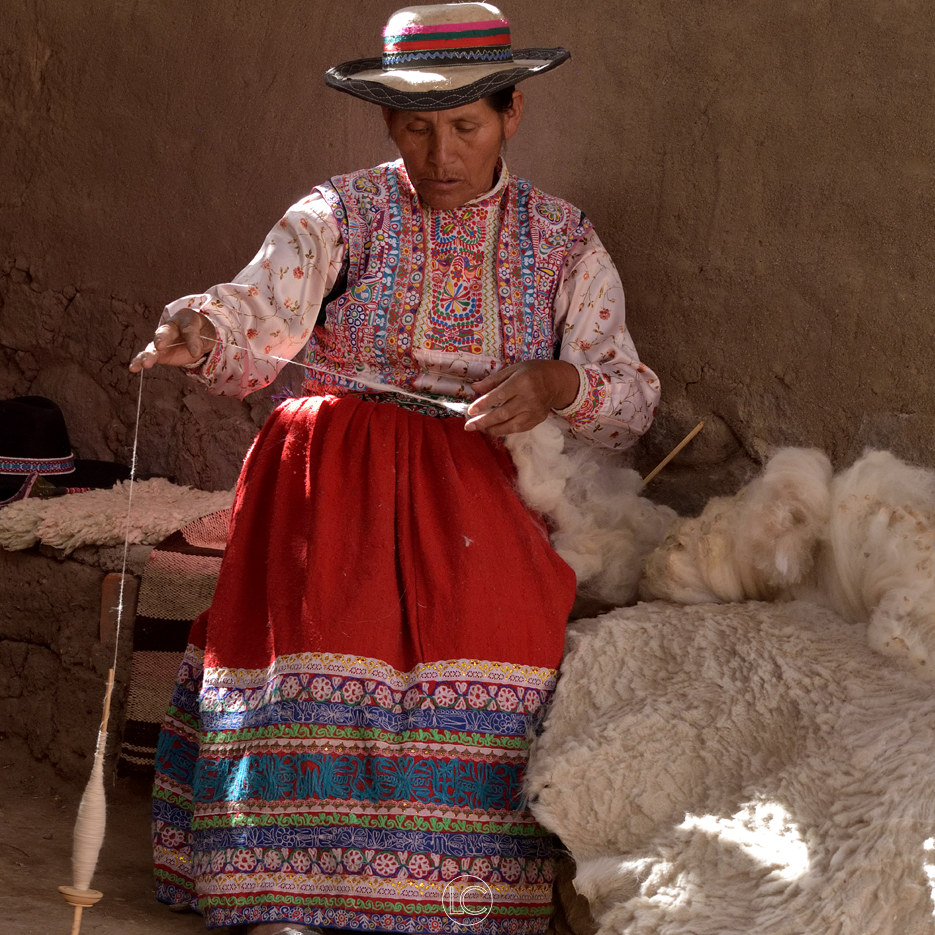
An elder weaver was waiting for us in her humble home, her red skirt fanning out around her. She wore the full Collagua dress: an intricately embroidered vest over a floral blouse, the wide hat with its pink and green band. Freddy spoke with her in Quechua and translated as she showed us the full process from preparing and dying the raw wool to spinning it on a spindle, then working it on a backstrap loom into a tight, geometric weave. Her hands were so weathered yet sure.
Inside, her daughter was embroidering a strip of dark cloth with the figure of a condor in mid-flight with gold thread — the same bird we’d seen that morning. We bought a few small things for the kids and drove back to Puqio as the light began to soften.
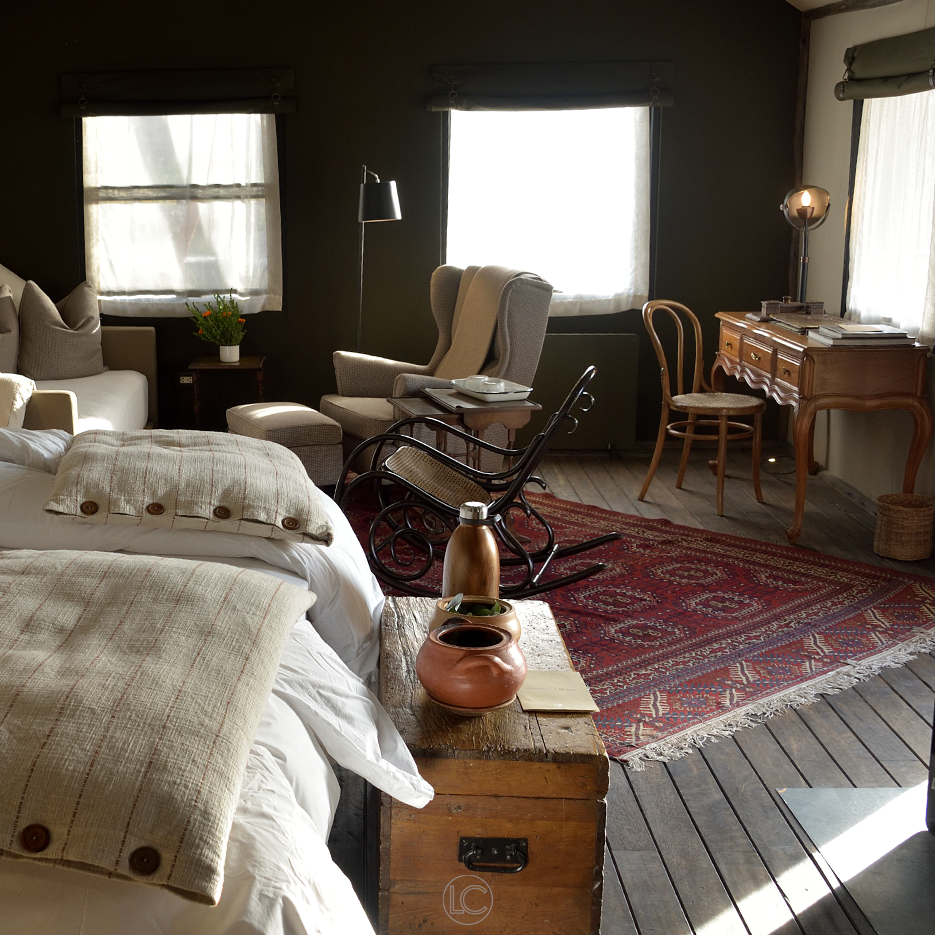
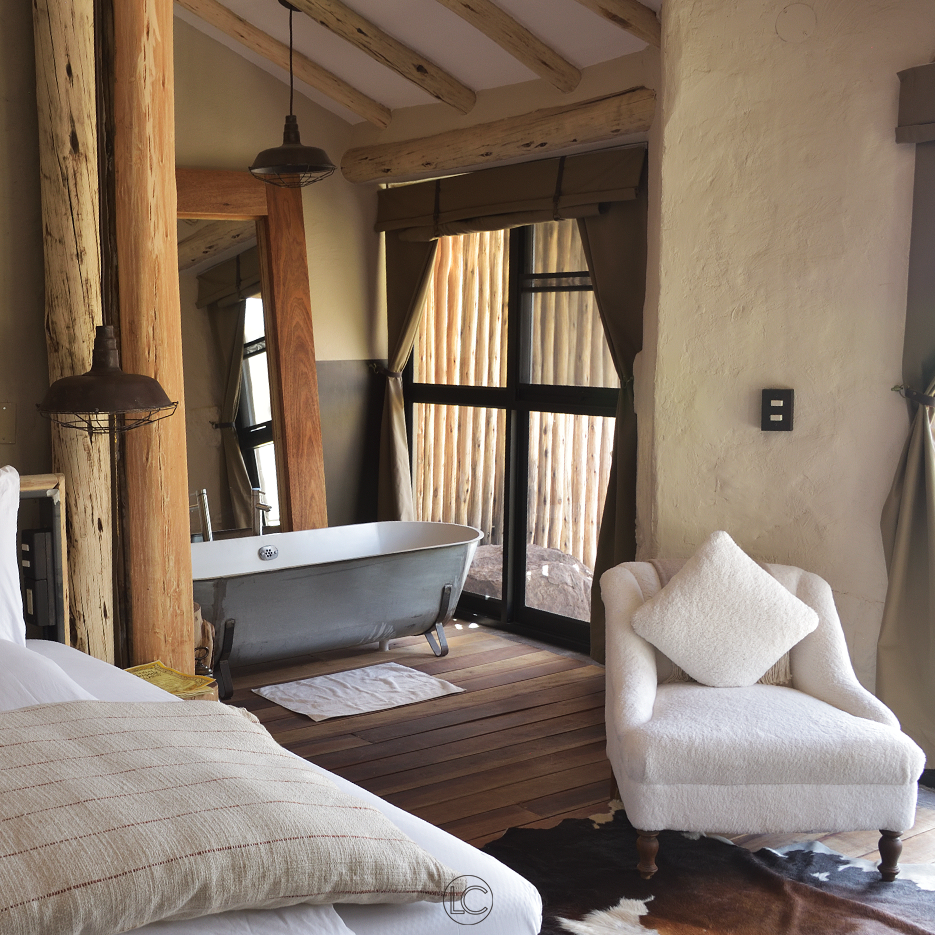
Tired from the day, I melted into the bed in our canvas tent for a short siesta. The light streaming in was beautiful and it made the tent glow with its dark wood floors, Persian rug, an old steamer trunk at the foot of the bed, and a bentwood rocking chair by the window. The canvas walls rose to a high peaked ceiling, and when the wind gusted, the whole structure breathed. It felt like sleeping inside the landscape rather than sheltering yourself from it.
Near sunset, my husband and I changed into our swimsuits, donned bath robes, and set off on foot past the fava bean patch to the deep wooden hot tub at the edge of the property nestled among the eucalyptus trees. Below, the canyon fell away to the river and the terraces glowed in the end of day light. The howling wind had begun to pick up again. I shivered as I took off my bathrobe and quickly slipped into the hot water. After two days of altitude, dust, and winding roads, the hot water felt like the kind of physical relief that bordered on a transcendental experience.
Later that night, after dinner, walking back along the wooden boardwalk to our tent with the main lodge glowing warmly behind us, I looked up at the dark sky, full of stars, and could see the Milky Way with the naked eye.
We bid farewell to Freddy and started the long drive back to the Arequipa airport after breakfast the next morning. Two nights was simply not enough. The intentionality required to reach Colca, the acclimatization, the sheer amount to do — it was not a place to cut short.
As we took off for Lima and circled around the three volcanoes, I thought to myself, “I’ll be back.”